


Investigation and Analysis of the Damage Characteristics of the M6.3 Earthquake in Haixi, Qinghai
-
摘要: 2026年06月16日17时06分(北京时间),青海省海西州大柴旦行委(37.80°N,95.56°E)发生6.3级地震,震源深度10 km,发震构造为大柴旦-宗务隆山断裂。本文基于地震现场震害调查与烈度评定,系统分析了该地震的震害特征与成灾机理。结果表明,Ⅵ度及以上烈度区面积约
6144 km2,Ⅷ度区面积约31 km2。震害主要表现为未按现行抗震设防标准建造的老旧土木、砖木及砖混结构房屋破坏严重,部分按现行标准设防的框架结构房屋受损,城区道路交通设施破坏,并出现落石、崩塌、软土震陷、砂土液化及地表裂缝等次生灾害。尽管此次地震震感强烈、宏观烈度较高,场地及断层效应显著,但由于区域人口与建筑物密度低、抗震设防标准较高,加之地震应急处置响应迅速高效,整体灾情较轻,仅造成1人遇难、8人轻伤。本研究揭示了高海拔、低人口密度地区地震灾害的特殊性,表明工程抗震设防、场地条件及应急管理对震害控制具有关键作用,可为类似地区的地震灾后重建与震害防御提供科学参考。Abstract: At 17:06 on June 16, 2026 (Beijing Time), a 6.3-magnitude earthquake struck the Dachaidan Administrative Committee in Haixi Prefecture, Qinghai Province (37.80°N, 95.56°E). The earthquake had a focal depth of 10 km and originated along the Dachaidan-Zongwulong Mountain Fault. Based on field investigations of earthquake damage and intensity assessments, this paper systematically analyzes the damage characteristics and disaster mechanisms of this earthquake. The results show that the area with intensity VI or higher covered approximately 6 144 km2, while the area with intensity VIII covered approximately 31 km2. The damage was primarily manifested in severe destruction of old civil engineering, brick-wood, and brick-concrete structures that were not built in accordance with current seismic design standards; some frame structures designed to meet current standards were also damaged; urban road and traffic infrastructure was destroyed; and secondary disasters such as rockfalls, landslides, soft-soil subsidence, sand liquefaction, and surface cracks occurred. Although this earthquake was strongly felt, had a high macroseismic intensity, and exhibited significant site and fault effects, the overall damage was relatively minor—resulting in only one fatality and eight minor injuries—due to the region’s low population and building density, high seismic design standards, and a rapid and efficient emergency response. This study highlights the unique characteristics of seismic disasters in high-altitude, low-population-density areas, demonstrating that seismic design standards, site conditions, and emergency management play a critical role in mitigating seismic damage. It provides a scientific reference for post-earthquake reconstruction and seismic hazard mitigation in similar regions.-
Key words:
- Haixi earthquake /
- Characteristics of earthquake damage /
- Site effect
-

图 1 青海海西6.3级地震烈度图(中国地震局,2026)
Figure 1. Map of seismic intensity for 6.3 earthquake in Haixi, Qinghai Province (China Earthquake Administration, 2026)
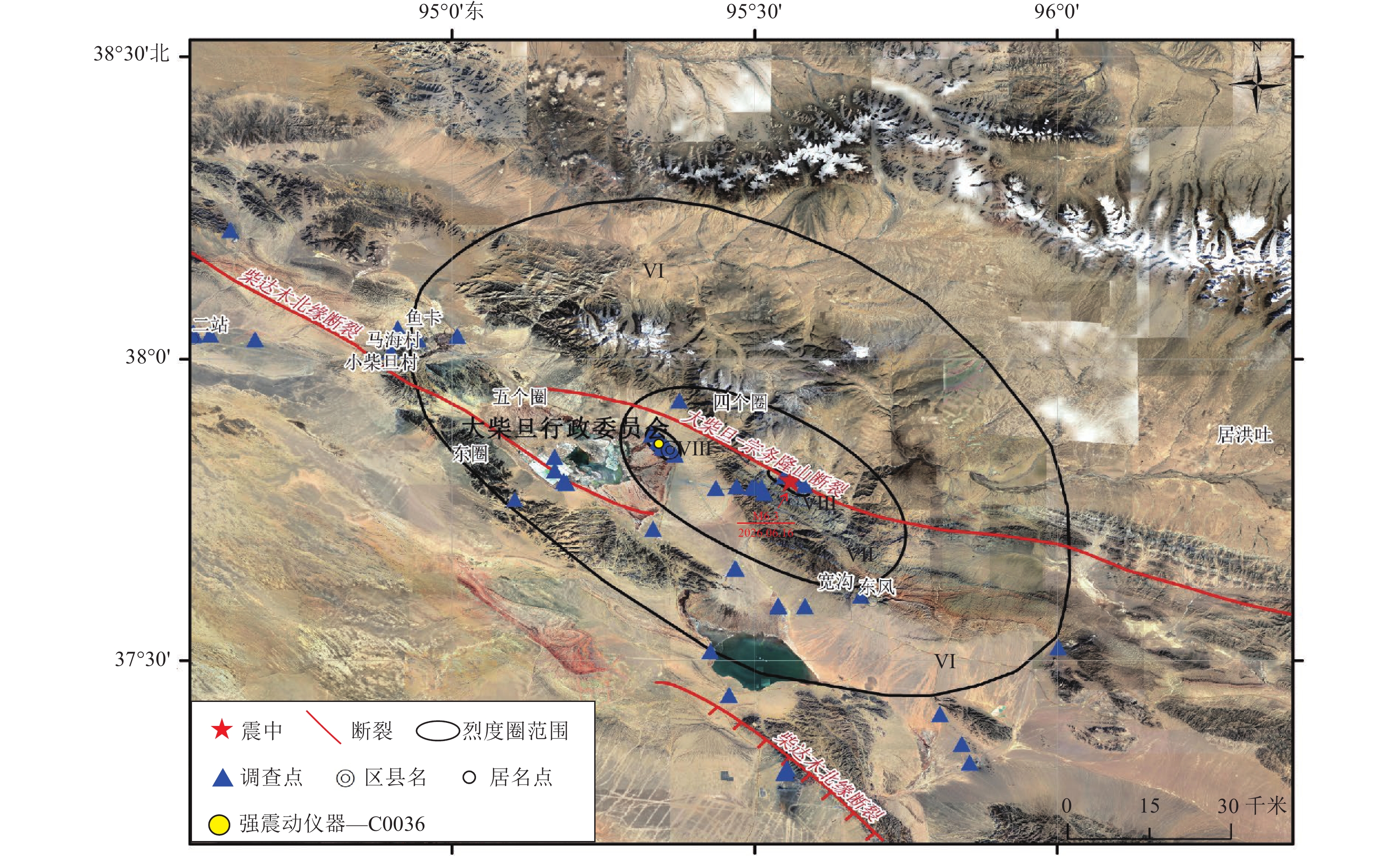
图 2 青海海西 6.3级地震调查点分布图
Figure 2. Distribution of survey sites for 6.3 earthquake in Haixi, Qinghai
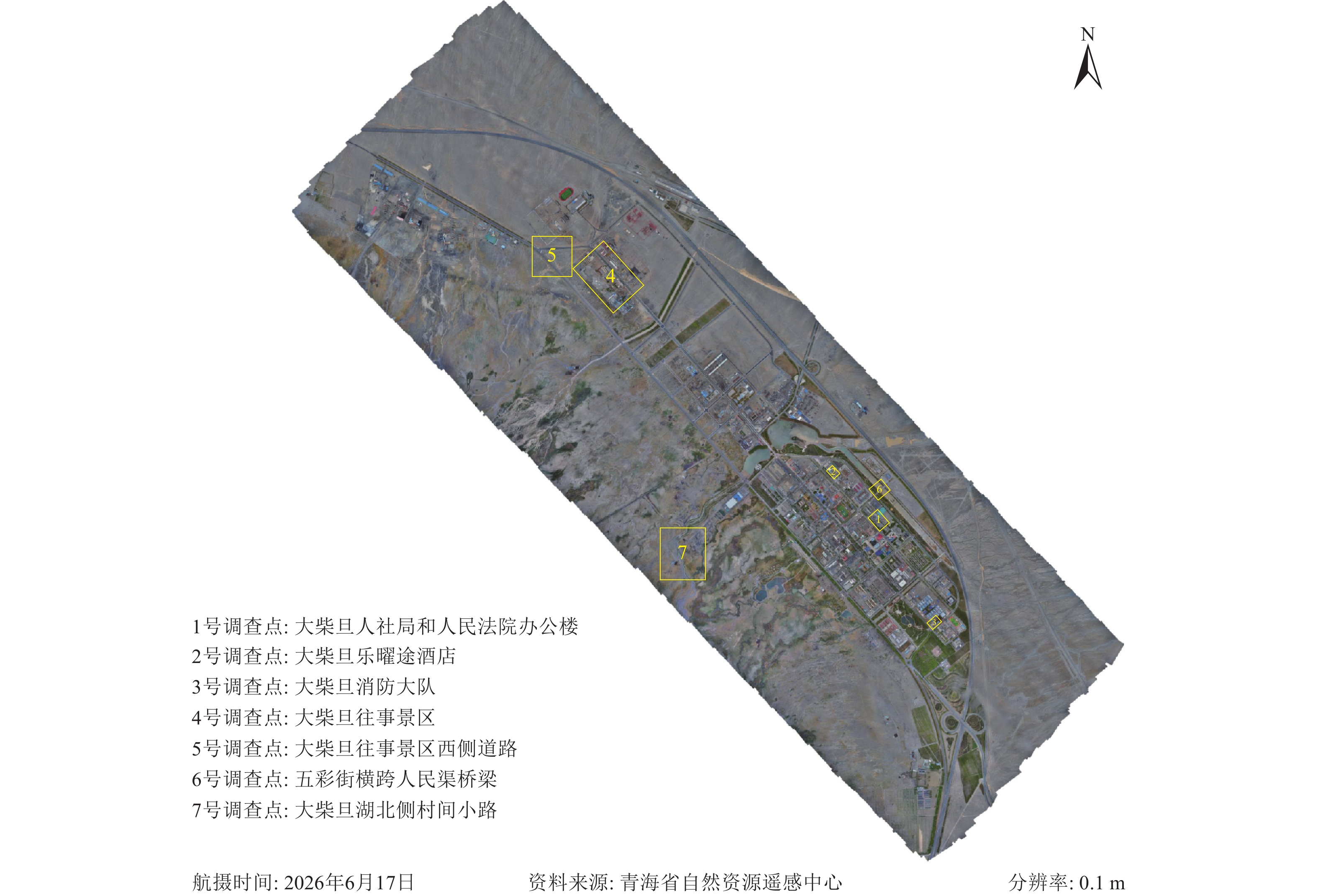
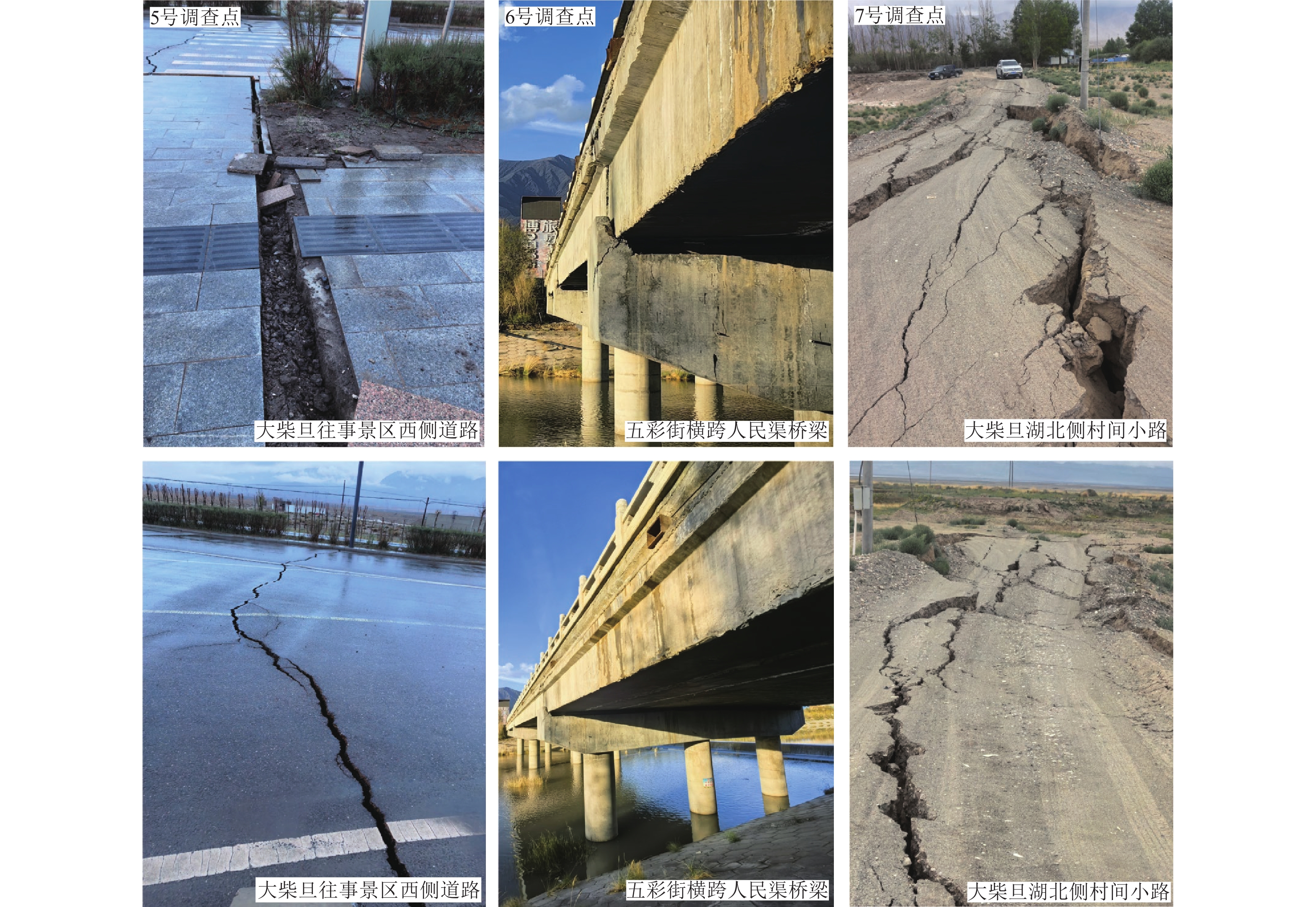
图 3 柴旦镇震后遥感影像及典型调查点图
Figure 3. Post-earthquake remote sensing images and typical survey site maps of Chaidam Town
-
程建武, 陈继峰, 刘旭宙, 2020. 青藏高原北部地区地震统计区划分及地震活动特征. 地震地磁观测与研究, 41(3): 1−11. doi: 10.3969/j.issn.1003-3246.2020.03.001Cheng J. W., Chen J. F., Liu X. Z., 2020. Division of seismic statistical areas and analysis of seismicity trend in the northern part of the Qinghai-Tibet Plateau. Seismological and Geomagnetic Observation and Research, 41(3): 1−11. (in Chinese) doi: 10.3969/j.issn.1003-3246.2020.03.001 胡进军, 丁龙兵, 刘名吉, 2026. 区域性近断层脉冲地震动模型−−以土耳其地区为例. 地震工程与工程振动, 46(1): 66−77. doi: 10.13197/j.eeed.2026.0107Hu J. J., Ding L. B., Liu M. J., 2026. Regional near-fault pulse-like ground motion model: a case study of the Turkey region. Earthquake Engineering and Engineering Dynamics, 46(1): 66−77. (in Chinese) doi: 10.13197/j.eeed.2026.0107 李恒, 雷东宁, 范珂显, 2020. 2019-12-26湖北应城M4.9地震强震动特征分析. 大地测量与地球动力学, 40(6): 551−554, 576. doi: 10.14075/j.jgg.2020.06.001Li H., Lei D. N., Fan K. X., 2020. Characteristics of strong motion recordings of Hubei Yingcheng M4.9 earthquake on 26 December 2019. Journal of Geodesy and Geodynamics, 40(6): 551−554,576. (in Chinese) doi: 10.14075/j.jgg.2020.06.001 李鑫, 姚生海, 殷翔等, 2021. 青海玛多7.4级地震极震区震灾调查及分析. 震灾防御技术, 16(3): 429−436.Li X., Yao S. H., Yin X., et al., 2021. Investigation and analysis of earthquake disaster in the extreme earthquake area of MS7.4 earthquake in Qinghai Province. Technology for Earthquake Disaster Prevention, 16(3): 429−436. (in Chinese) 陶夏新, 王国新, 2003. 近场强地震动模拟中对破裂的方向性效应和上盘效应的表达. 地震学报, 25(2): 191−198. doi: 10.3321/j.issn:0253-3782.2003.02.009Tao X. X., Wang G. X., 2003. Rupture directivity and hanging wall effect in near field strong ground motion simulation. Acta Seismologica Sinica, 25(2): 191−198. (in Chinese) doi: 10.3321/j.issn:0253-3782.2003.02.009 屠泓为, 赵燕杰, 罗国富等, 2012. 大柴旦-宗务隆山断裂及邻近区域震源机制解计算及分析. 国际地震动态, (6): 92.Tu H. W., Zhao Y. J., Luo G. F., et al., 2012. Calculation and analysis of focal mechanism solutions for the Da Chaidan–Zongwulong mountain fault and adjacent areas. Recent Developments in World Seismology, (6): 92. (in Chinese) 王青桥, 韦晓, 王君杰, 2009. 桥梁桩基震害特点及其破坏机理. 震灾防御技术, 4(2): 167−173. doi: 10.3969/j.issn.1673-5722.2009.02.005Wang Q. Q., Wei X., Wang J. J., 2009. Characteristics and mechanisms of earthquake damage of bridge pile foundation. Technology for Earthquake Disaster Prevention, 4(2): 167−173. (in Chinese) doi: 10.3969/j.issn.1673-5722.2009.02.005 夏坤, 段文斐, 李彦苍等, 2026. 土耳其地震强震区近地表剪切波速对地震地面运动的影响及对我国设计谱特征参数修订的启示. 岩土工程学报, 1−10[2026-06-25]. https://link.cnki.net/urlid/32.1124.TU.20260425.2141.006.Xia K., Duan W. F., Li Y. C., et al., 2026. Influence of near-surface shear wave velocity on seismic ground motion in Turkey Earthquake and the enlightenment on revision of seismic design response spectrum characteristic parameters in China. Chinese Journal of Geotechnical Engineering, 1−10. https://link.cnki.net/urlid/32.1124.TU.20260425.2141.006. (in Chinese) 中国地震局, 2026. 中国地震局发布青海海西6.3级地震烈度图[EB/OL]. (2026-06-18)[2026-06-25]. https://www.cea.gov.cn/cea/xwzx/fzjzyw/5845436/index.html. 卓发成, 2020. 基岩倾角对盆地地震响应的影响分析. 地震工程学报, 42(4): 1035−1042. doi: 10.3969/j.issn.1000-0844.2020.04.1035Zhuo F. C., 2020. Seismic response of basin site under plane wave with different bedrock inclinations. China Earthquake Engineering Journal, 42(4): 1035−1042. (in Chinese) doi: 10.3969/j.issn.1000-0844.2020.04.1035 Abrahamson N. A., Somerville P. G., 1996. Effects of the hanging wall and footwall on ground motions recorded during the Northridge earthquake. Bulletin of the Seismological Society of America, 86(1B): S93−S99. doi: 10.1785/BSSA08601B0S93 Somerville P., 2000. Seismic hazard evaluation. Bulletin of the New Zealand Society for Earthquake Engineering, 33(3): 371−386. doi: 10.5459/bnzsee.33.3.371-386 -

 下载:
下载:



 点击查看大图
图(7)
计量
- 文章访问数: 27
- HTML全文浏览量: 35
- PDF下载量: 11
- 被引次数: 0
