


Investigation of Building Seismic Damage Characteristics and Causative Analysis of the 2026 Liuzhou ML5.2 Earthquake Doublet
-
摘要: 2026年5月18日广西柳州市柳南区相隔21小时接连发生2次5.2级逆冲型地震。地震造成16栋房屋完全倒塌、970栋房屋严重受损,震中烈度达Ⅶ度。基于现场震害调查,结合震中区地质条件,特别是喀斯特岩溶影响,本文分析了房屋震害特征及其成因。结果表明:地震震源浅、双主震及地下溶洞的地震动放大效应,是本次“小震级、高烈度”致灾模式的直接诱因;同时,震中区多为抗震性能差的自建砌体房屋,普遍存在高宽比过大、缺乏圈梁和构造柱等构造措施、基础薄弱、整体约束不足等系统性缺陷,在地震作用下,易产生沿灰缝的水平滑移裂缝,进而导致失稳倒塌;另外,地震诱发的岩溶塌陷及地基沉降,进一步加剧了房屋开裂和倒塌。Abstract: On May 18, 2026, two ML5.2 thrust-faulting earthquakes struck Liunan District, Liuzhou City, Guangxi Zhuang Autonomous Region, China, within a 21-hour interval. Despite their moderate magnitudes, the earthquakes caused the complete collapse of 16 buildings, severe damage to 970 buildings, and a maximum epicentral intensity of VII, exemplifying a typical “small magnitude, high intensity” disaster scenario. Based on detailed field damage surveys, combined with the local geological conditions—particularly the influence of karst topography—this study analyzes the characteristics and underlying causes of building damage. The results indicate that the shallow focal depth, the double-mainshock sequence, and the seismic amplification effects induced by underground karst cavities were the direct triggers of this high-intensity pattern. Moreover, most of the affected buildings were non-engineered self-built masonry houses with poor seismic performance, exhibiting systemic structural deficiencies such as excessive height-to-width ratios, lack of reinforced concrete tie beams and confined columns, weak foundations, and inadequate overall integrity. Under seismic loading, these vulnerabilities promoted horizontal sliding cracks along mortar joints, ultimately leading to instability and collapse. In addition, karst collapse and ground subsidence triggered by the earthquakes further aggravated cracking and failure of the buildings. The findings provide valuable references for seismic design and retrofitting of rural non-engineered masonry buildings in low-seismicity regions, as well as for geological hazard prevention and mitigation in karst areas.
-
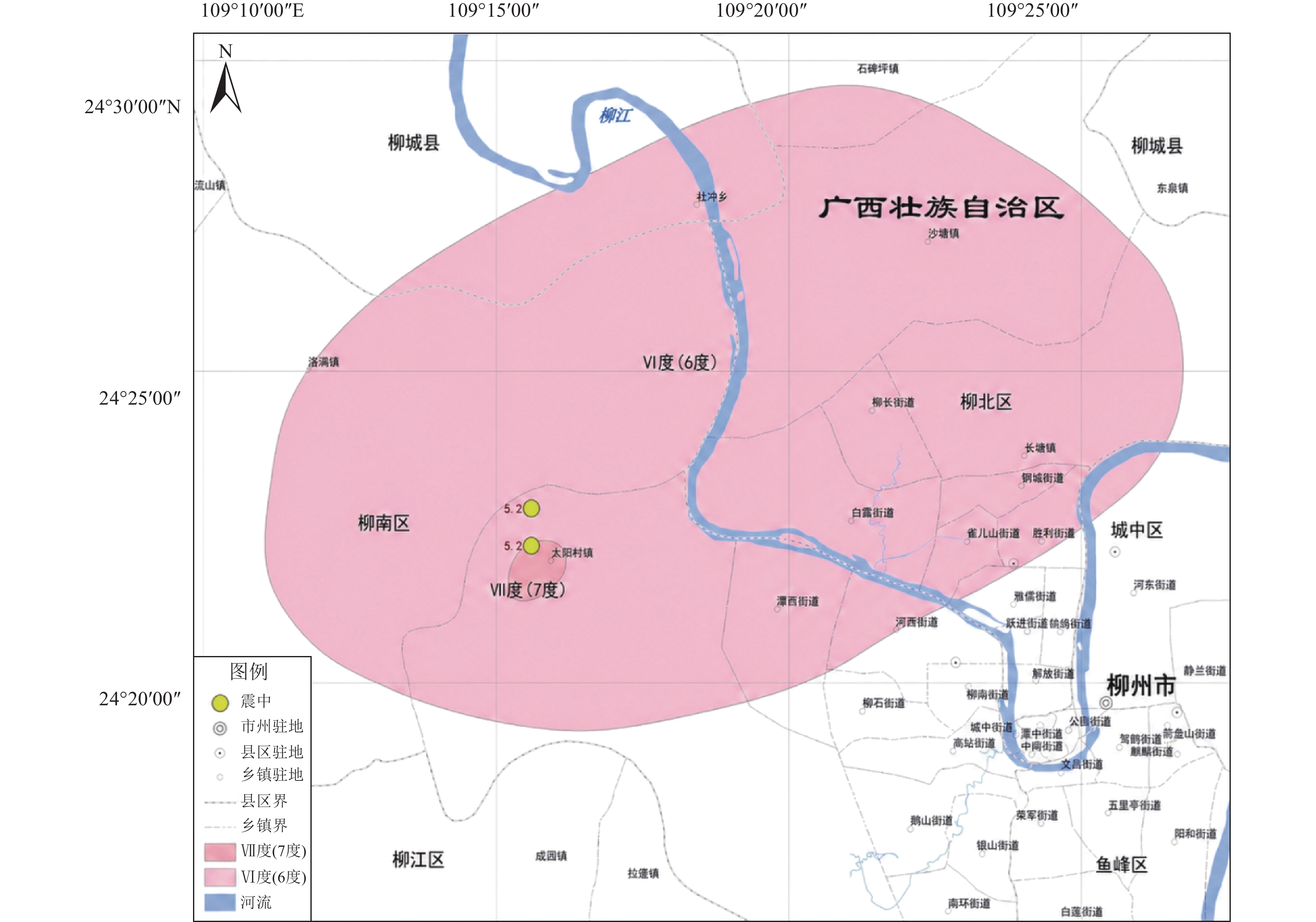
图 1 广西柳州5.2级双震地震烈度图
Figure 1. Seismic intensity map of the 2026 Liuzhou ML5.2 earthquake doublet, Guangxi, China
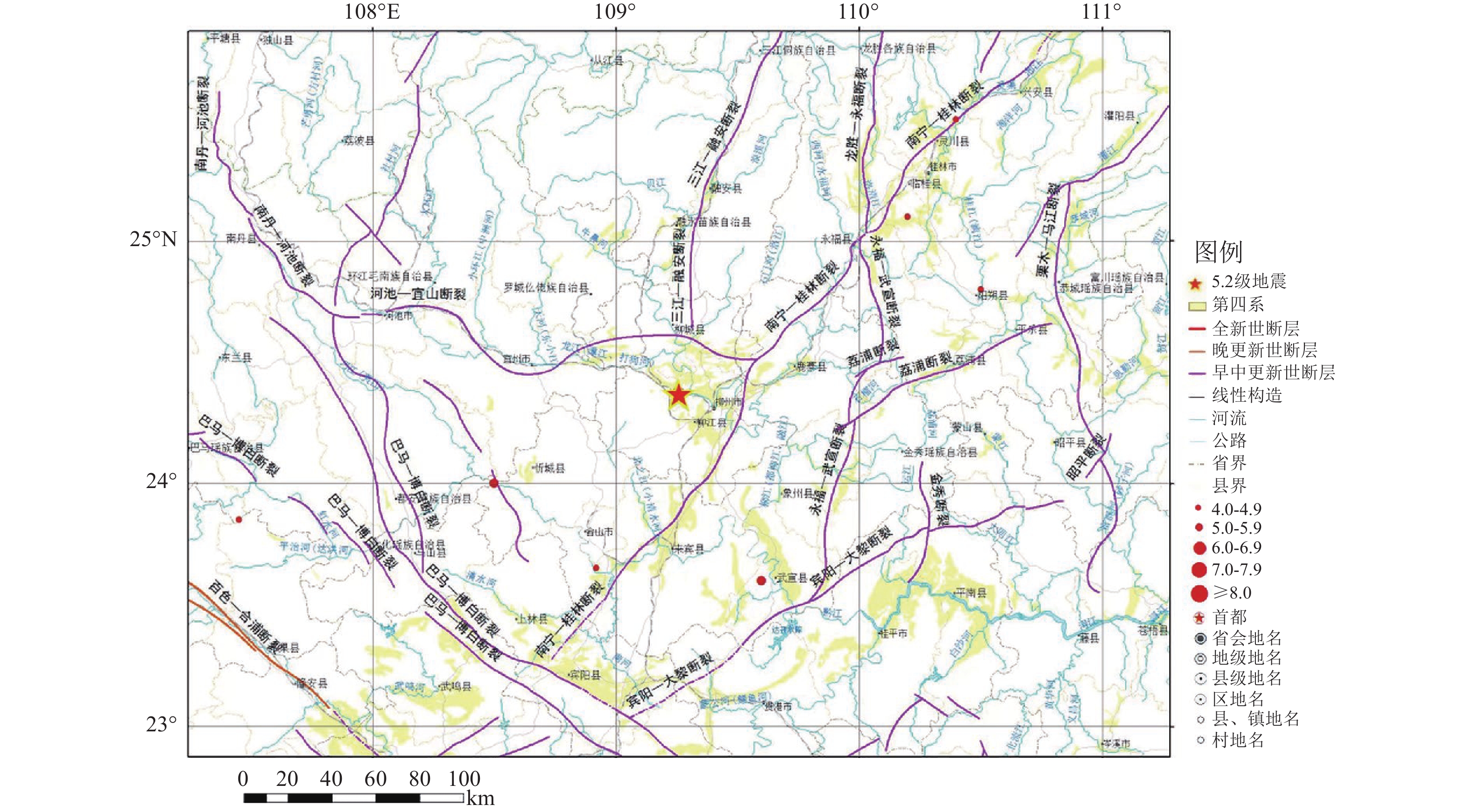
图 2 广西柳州5.2级双震区域地震构造图(中国地震局地质研究所,2026;Wu et al.,等,2024)
Figure 2. Seismotectonic map of the 2026 Liuzhou ML5.2 earthquake doublet, Guangxi, China (Institute of Geology, China Earthquake Administration, 2026;Wu et al., 2024)
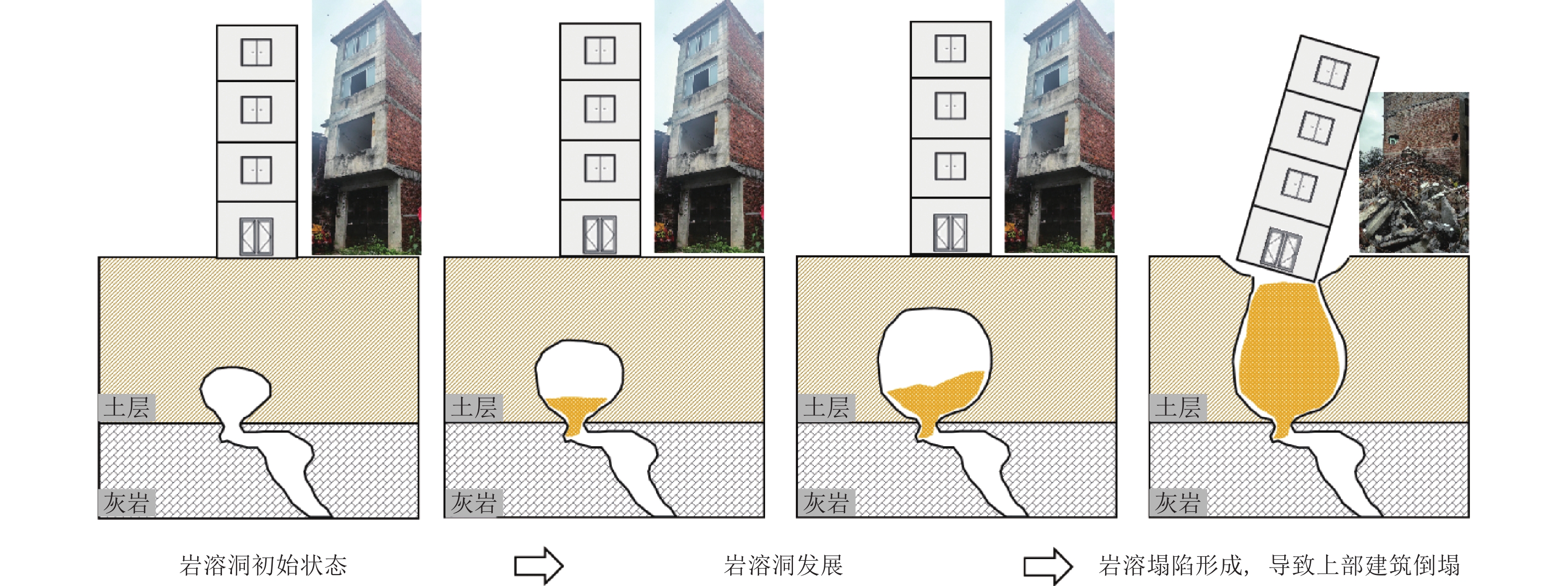
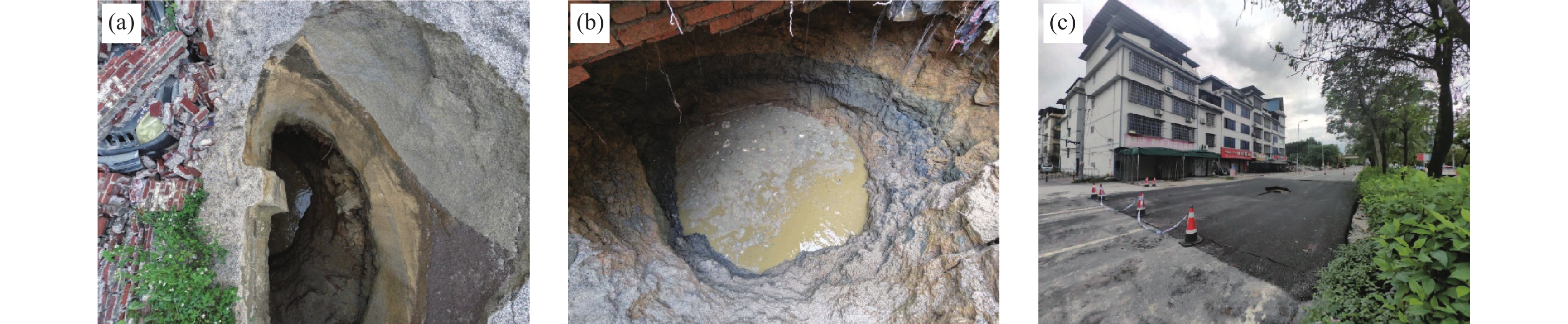
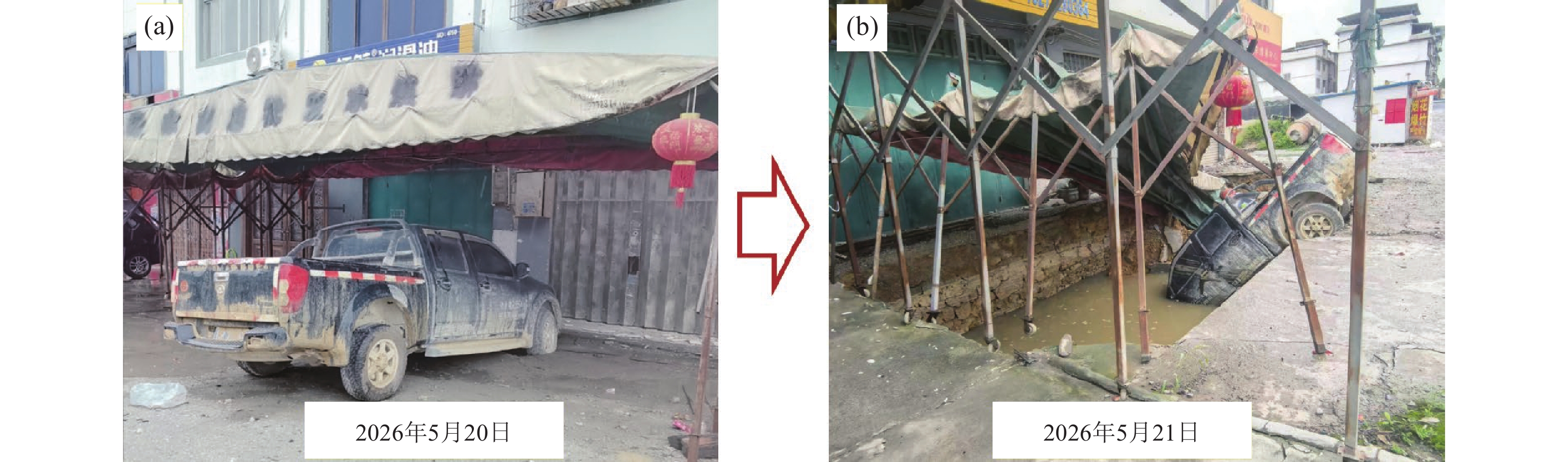
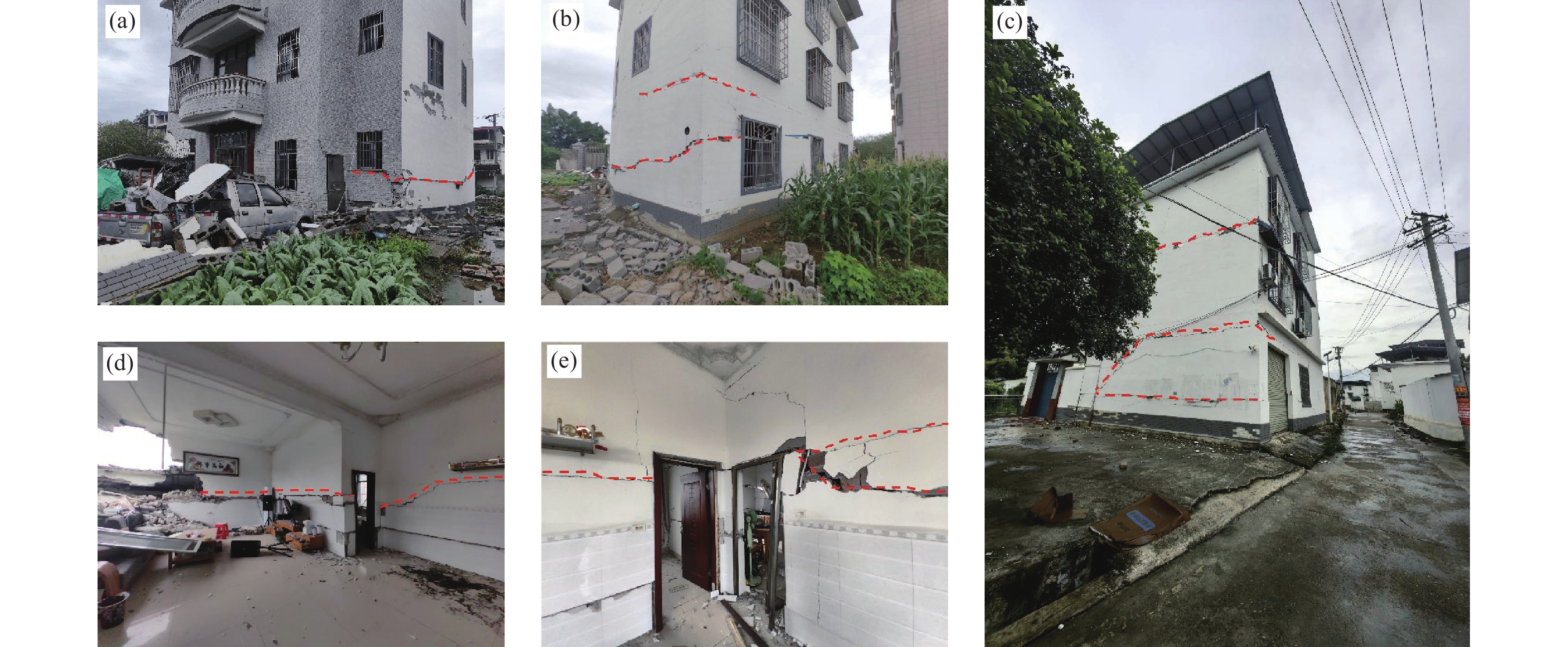
图 4 岩溶塌陷造成房屋倒塌过程示意图
Figure 4. Schematic diagram of the process of house collapse caused by karst collapse
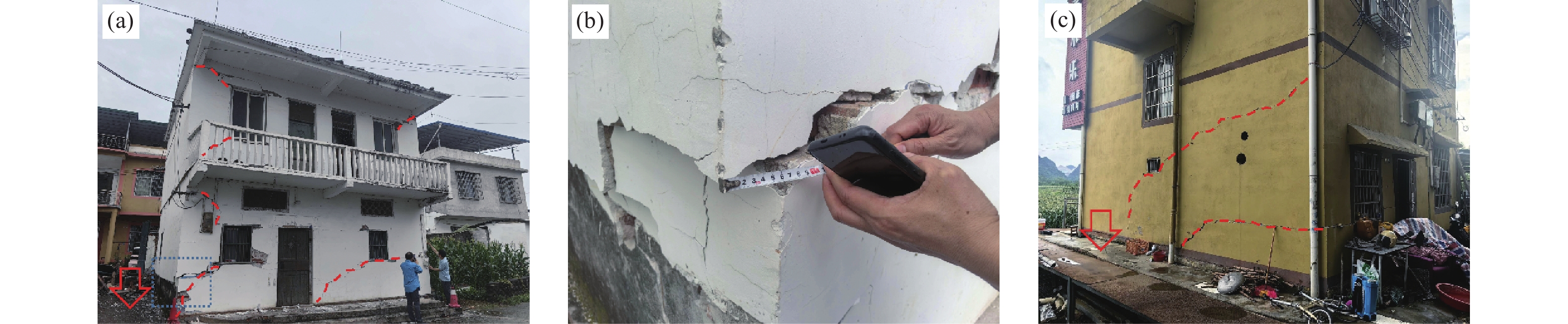
图 8 砌体结构沉降造成的墙体开裂
Figure 8. Wall cracking induced by foundation settlement in masonry structures
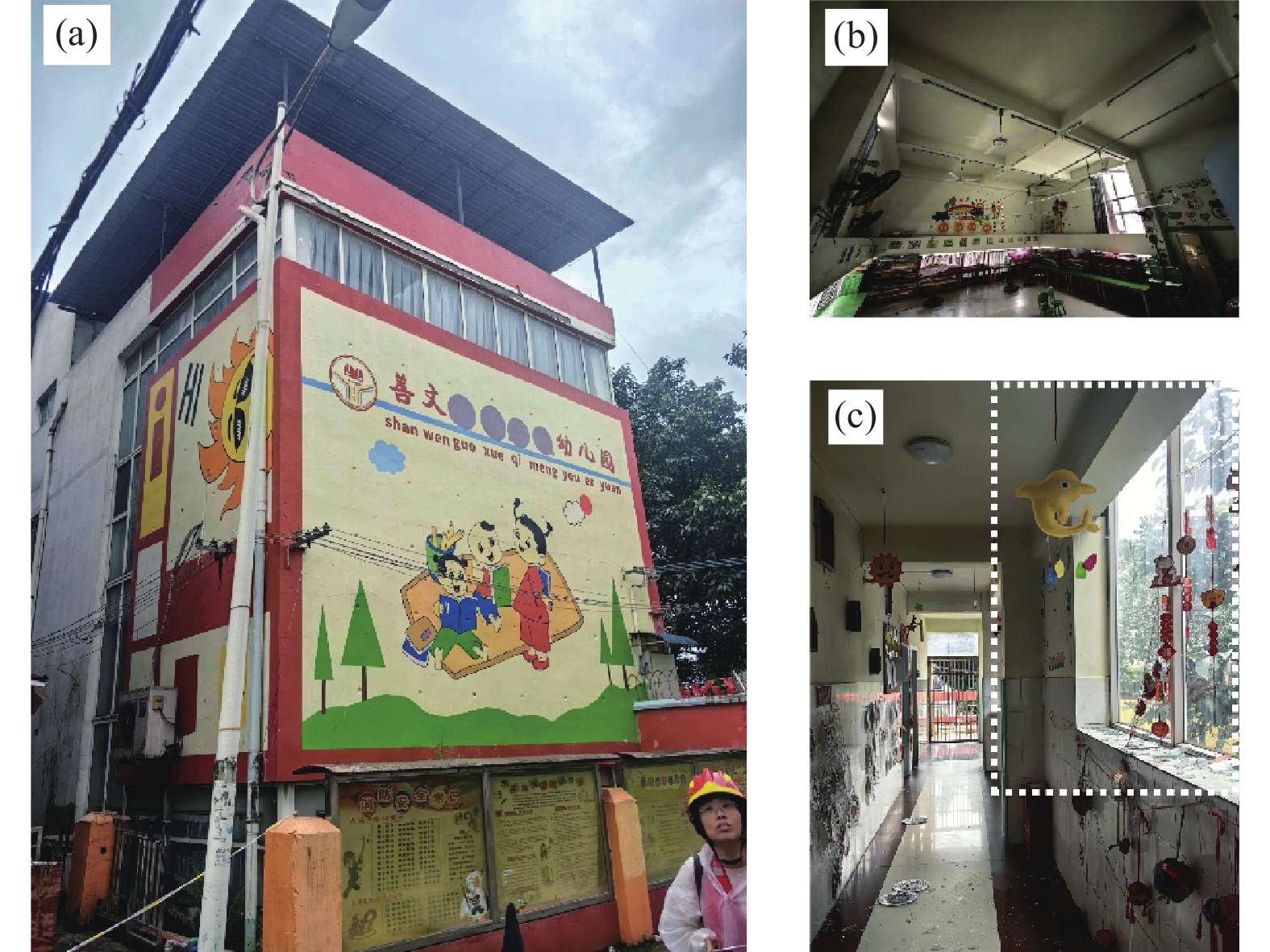
图 10 某框架结构非结构构件震害
Figure 10. Seismic damage to non-structural components in a frame structure
表 1 广西5级以上破坏性地震汇总
Table 1. Destructive earthquakes with M ≥ 5.0 in Guangxi
序号 日期 地点 震级 死亡人数 备注 1 1875‑06‑08 乐业县
(凌云北)6.5 数百人 广西史上第二大强震,波及桂、黔、湘、滇 2 1890‑08‑29 陆川县 6.0 无明确记录 桂东南10余县有感,房屋墙动瓦落 3 1936‑04‑01 灵山县
(含浦北)6.8 92~94人 广西史上最大地震,死亡92人,伤263人,毁房7 000余间 4 1977‑10‑19 平果市 5.0 0人 轻微破坏,无伤亡 5 2016‑07‑31 苍梧县 5.4 0人 1970年以来广西陆地最大地震,倒塌房屋10间,严重破坏13间 6 2019‑10‑12 北流市 5.2 0人 无人员伤亡,未有房屋倒塌出现 7 2019‑11‑25 靖西市 5.2 1人 5人受伤,严重损伤房屋15间 8 2026‑05‑18 柳州市柳南区 5.2 2人 91岁老人被困获救,4人受伤  下载: 导出CSV
-
曹建华, 蒋忠诚, 袁道先等, 2017. 岩溶动力系统与全球变化研究进展. 中国地质, 44(5): 874−900. doi: 10.12029/gc20170504Cao J. H., Jiang Z. C., Yuan D. X., et al., 2017. The progress in the study of the karst dynamic system and global changes in the past 30 years. Geology in China, 44(5): 874−900. (in Chinese) doi: 10.12029/gc20170504 戴建玲, 雷明堂, 蒋小珍等, 2020. 极端气候与岩溶塌陷. 中国矿业, 29(S2): 402−404.Dai J. L., Lei M. T., Jiang X. Z., et al., 2020. Extreme climate and sinkhole. China Mining Magazine, 29(S2): 402−404. (in Chinese) 广西壮族自治区防灾减灾救灾委员会办公室, 2024. 广西第一次全国自然灾害综合风险普查公报汇编. (2024-10-12)[2026-06-30]. http://yjglt.gxzf.gov.cn/gwgg/P020241012566320797967.pdf. 何声, 杨仕升, 蒙雷, 2015. 岩溶场地地表地震动特性研究. 地震工程学报, 37(2): 534−540. doi: 10.3969/j.issn.1000-0844.2015.02.0534He S., Yang S. S., Meng L., 2015. Ground motion characteristics of karst sites. China Earthquake Engineering Journal, 37(2): 534−540. (in Chinese) doi: 10.3969/j.issn.1000-0844.2015.02.0534 黄果, 刘争平, 刘茂洋, 2021. 地下空洞的面波场地效应数值模拟研究. 地震工程学报, 43(2): 468−475. doi: 10.3969/j.issn.1000-0844.2021.02.468Huang G., Liu Z. P., Liu M. Y., 2021. Numerical simulation of site effect of surface wave in underground cavities. China Earthquake Engineering Journal, 43(2): 468−475. (in Chinese) doi: 10.3969/j.issn.1000-0844.2021.02.468 黄谦, 黄存平, 颜华, 2014. 岩溶发育地区地震应急避难场所空间布局和建设探讨−−柳州市案例研究. 自然灾害学报, 23(6): 124−128. doi: 10.13577/j.jnd.2014.0615Huang Q., Huang C. P., Yan H., 2014. Exploration of spatial layout and construction of earthquake emergency shelter in karst region: a case study on Liuzhou City. Journal of Natural Disasters, 23(6): 124−128. (in Chinese) doi: 10.13577/j.jnd.2014.0615 梁飞, 阎春恒, 向巍等, 2020. 广西地区不同类型地震震源参数特征. 华北地震科学, 38(S2): 33−38.Liang F., Yan C. H., Xiang W., et al., 2020. Source parameter characteristics of different type earthquakes in Guangxi area. North China Earthquake Sciences, 38(S2): 33−38. (in Chinese) 梁建文, 纪晓东, 2006. 地下衬砌洞室对Rayleigh波的放大作用. 地震工程与工程振动, 26(4): 24−31. doi: 10.3969/j.issn.1000-1301.2006.04.004Liang J. W., Ji X. D., 2006. Amplification of Rayleigh waves due to underground lined cavities. Earthquake Engineering and Engineering Vibration, 26(4): 24−31. (in Chinese) doi: 10.3969/j.issn.1000-1301.2006.04.004 柳州市抗震救灾指挥部, 2026. 官方通报柳州地震群众安置情况: 安置对象合计约3750户9769人. (2026-05-21)[2026-06-30]. https://www.toutiao.com/article/7642157601572061723/. 文海涛, 吴福, 卢志文等, 2019. 广西柳州市岩溶塌陷成因类型与时空分布特征. 矿产与地质, 33(4): 753−758. doi: 10.3969/j.issn.1001-5663.2019.04.025Wen H. T., Wu F., Lu Z. W., et al., 2019. Genetic type and time-space distribution charateristics of karst collapse in Liuzhou City, Guangxi. Mineral Resources and Geology, 33(4): 753−758. (in Chinese) doi: 10.3969/j.issn.1001-5663.2019.04.025 谢毓寿, 蔡美彪, 1987. 中国地震历史资料汇编(第三卷下册). 北京: 科学出版社. 谢毓寿, 蔡美彪, 1985. 中国地震历史资料汇编(第四卷上册). 北京: 科学出版社. 谢毓寿, 蔡美彪, 1986. 中国地震历史资料汇编(第四卷下册). 北京: 科学出版社. 谢毓寿, 蔡美彪, 1983. 中国地震历史资料汇编(第五卷). 北京: 科学出版社. 新华社, 2026. 广西柳州地震五大关切追踪. (2026-05-21)[2026-06-30]. https://news.cctv.com/2026/05/21/ARTInRRJqsRSPHfEM7vAVBZq260521.shtml. 杨钦杰, 刘华贵, 高鹏飞等, 2016. 广西农村民居抗震性能调查研究. 震灾防御技术, 11(1): 100−110. doi: 10.11899/zzfy20160111Yang Q. J., Liu H. G., Gao P. F., et al., 2016. Investigation on the aseismic performance of rural buildings in Guangxi. Technology for Earthquake Disaster Prevention, 11(1): 100−110. (in Chinese) doi: 10.11899/zzfy20160111 杨钦杰, 李蕾, 聂冠军等, 2023. 广西南部农村群体建筑抗震能力评价. 世界地震工程, 39(4): 116−123. doi: 10.19994/j.cnki.WEE.2023.0083Yang Q. J., Li L., Nie G. J., et al., 2023. Evaluation of seismic capacity of rural group buildings in southern Guangxi. World Earthquake Engineering, 39(4): 116−123. (in Chinese) doi: 10.19994/j.cnki.WEE.2023.0083 张忠利, 齐文浩, 袁媛等, 2015. 广西覆盖型岩溶区Ⅱ类场地地震效应分析. 震灾防御技术, 10(3): 512−521. doi: 10.11899/zzfy20150304Zhang Z. L., Qi W. H., Yuan Y., et al., 2015. Seismic effect of type Ⅱ site in overlaying karst area of Guangxi. Technology for Earthquake Disaster Prevention, 10(3): 512−521. (in Chinese) doi: 10.11899/zzfy20150304 赵修敏, 李航, 梁结等, 2023. 中强地震灾害建筑物直接经济损失评估研究−−以广西3次5级以上地震为例. 地震工程与工程振动, 43(5): 158−164. doi: 10.13197/j.eeed.2023.0516Zhao X. M., Li H., Liang J., et al., 2023. Direct loss assessment of buildings in moderately strong earthquake disasters: case study of MS>5.0 earthquakes in Guangxi. Earthquake Engineering and Engineering Dynamics, 43(5): 158−164. (in Chinese) doi: 10.13197/j.eeed.2023.0516 中国地震局地质研究所, 2026. 2026年柳州5.2级双震的警示. (2026-05-20)[2026-06-30]. https://eq-igl.ac.cn/kydt/info/2026/39169.html. Faraone C., Colantonio F., Vessia G., 2023. Seismic amplification effects induced by ancient shallow cavities underneath the urban area of the historical city center of Chieti, Italy. Engineering Geology, 324: 107259. doi: 10.1016/j.enggeo.2023.107259 Liang J. W., Zhang J., Ba Z. N., 2012. Amplification of in-plane seismic ground motion by group cavities in layered half-space (II): With saturated poroelastic soil layers. Earthquake Science, 25(4): 287−298. doi: 10.1007/s11589-012-0854-2 Wu X. Y., Xu X. W., Yu G. H., et al., 2024. The China Active Faults Database (CAFD) and its web system. Earth System Science Data, 16(7): 3391−3417. doi: 10.5194/essd-16-3391-2024 -


 点击查看大图
计量
- 文章访问数: 198
- HTML全文浏览量: 61
- PDF下载量: 61
- 被引次数: 0
