


Research on Seismic Response Prediction of Frame Structures Based on Variable-Size Sliding Window—A Case Study of an Experimental Building in Beijing
-
摘要: 在使用固定尺寸滑动窗口处理数据的过程中,无法根据地震动强度差异和结构地震响应幅值变化动态提取时频特征,易造成关键特征丢失、预测精度下降等。本文提出一种使用可变尺寸滑动窗口处理数据的结构响应预测方法。该方法以一栋框架结构为研究对象,以100条地震动加速度时程记录及有限元模型输出的层间位移角作为数据集,基于提出的算法预测结构层间位移角值。预测结果与基于固定尺寸滑动窗口方法对比发现:本文提出的算法可有效实现框架结构的响应预测,且相较于固定尺寸滑动窗口方法,平均绝对百分比误差降低了12.27%,峰值层间位移角误差降低了7.87%。Abstract: In the process of processing data using a fixed-size sliding window, it is difficult to dynamically extract time-frequency features based on differences in ground motion intensity and amplitude variations of structural seismic responses, which can easily lead to the loss of key features and a reduction in prediction accuracy. This paper proposes a structural response prediction method that uses a variable-size sliding window for data processing. Taking a frame structure as the research object, and using 100 ground motion acceleration time-history records and the inter-story drift ratios output by a finite element model as the dataset, the proposed algorithm predicts the inter-story drift ratios. Comparison with prediction results based on a fixed-size sliding window shows that the proposed algorithm can effectively predict the response of the frame structure. Compared with the fixed-size sliding window method, the mean absolute percentage error is reduced by 12.27%, and the peak inter-story drift ratio error is reduced by 7.87%.
-
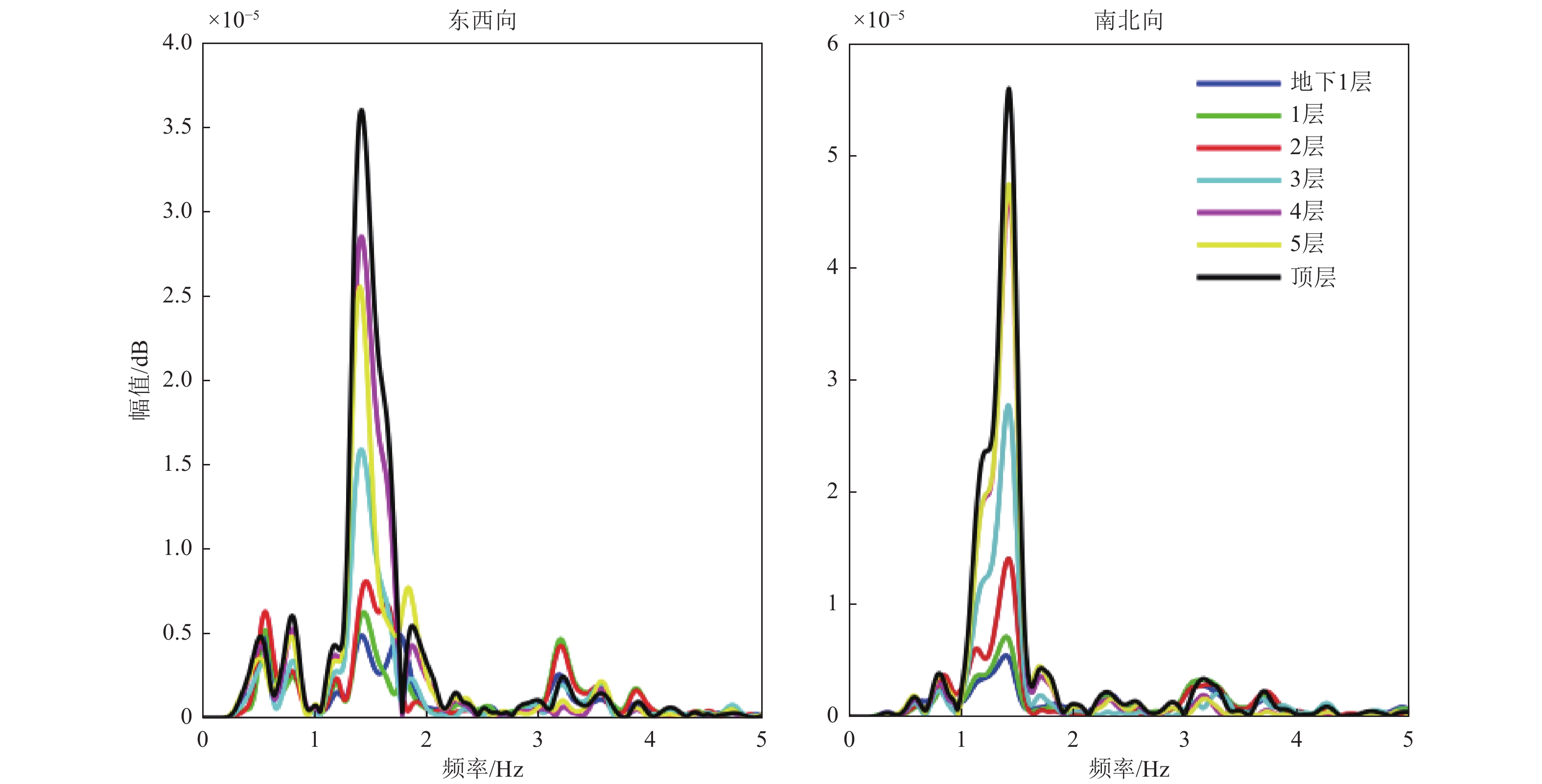
图 2 传递函数识别自振频率图
Figure 2. Transfer function diagram for natural frequency identification
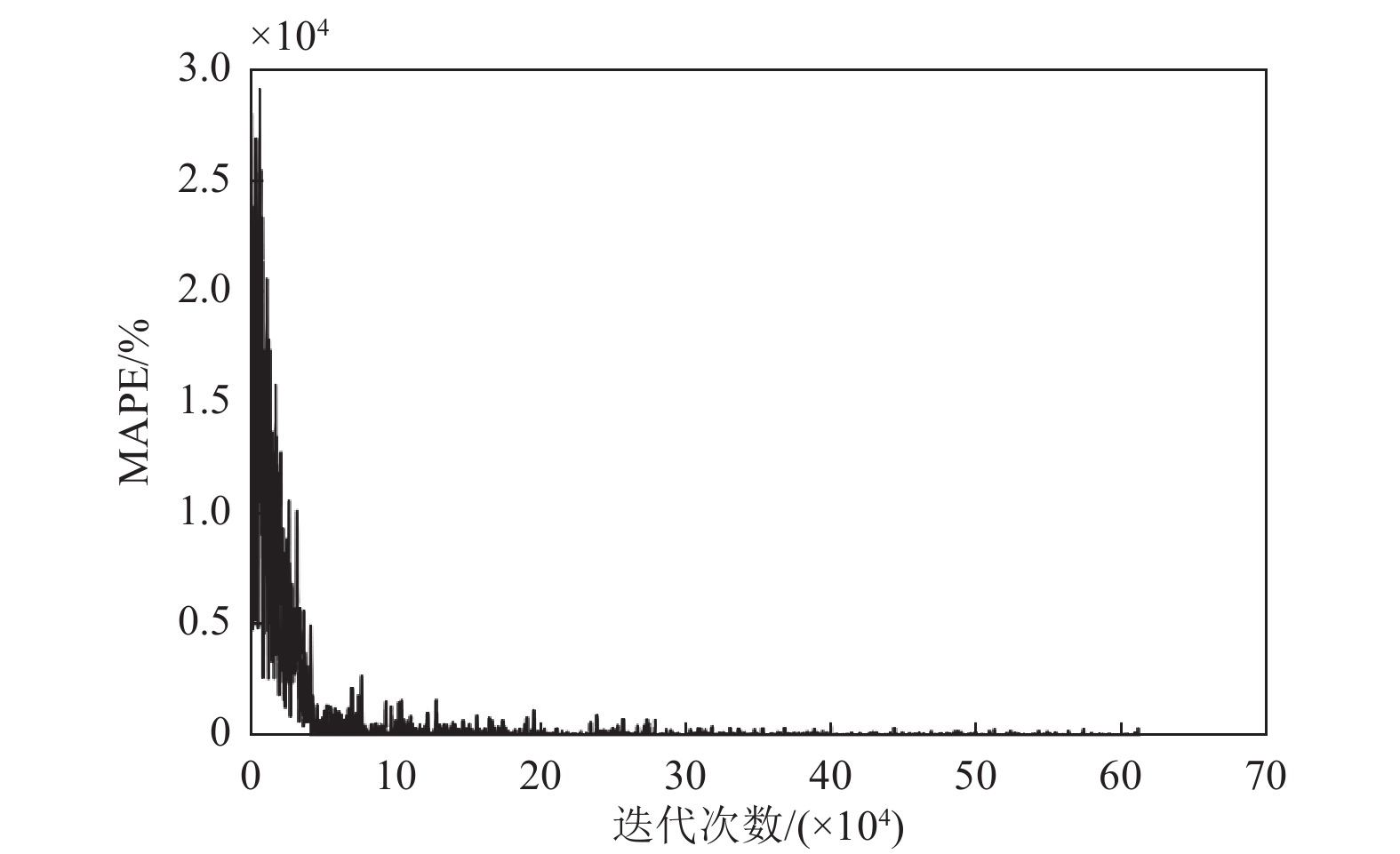
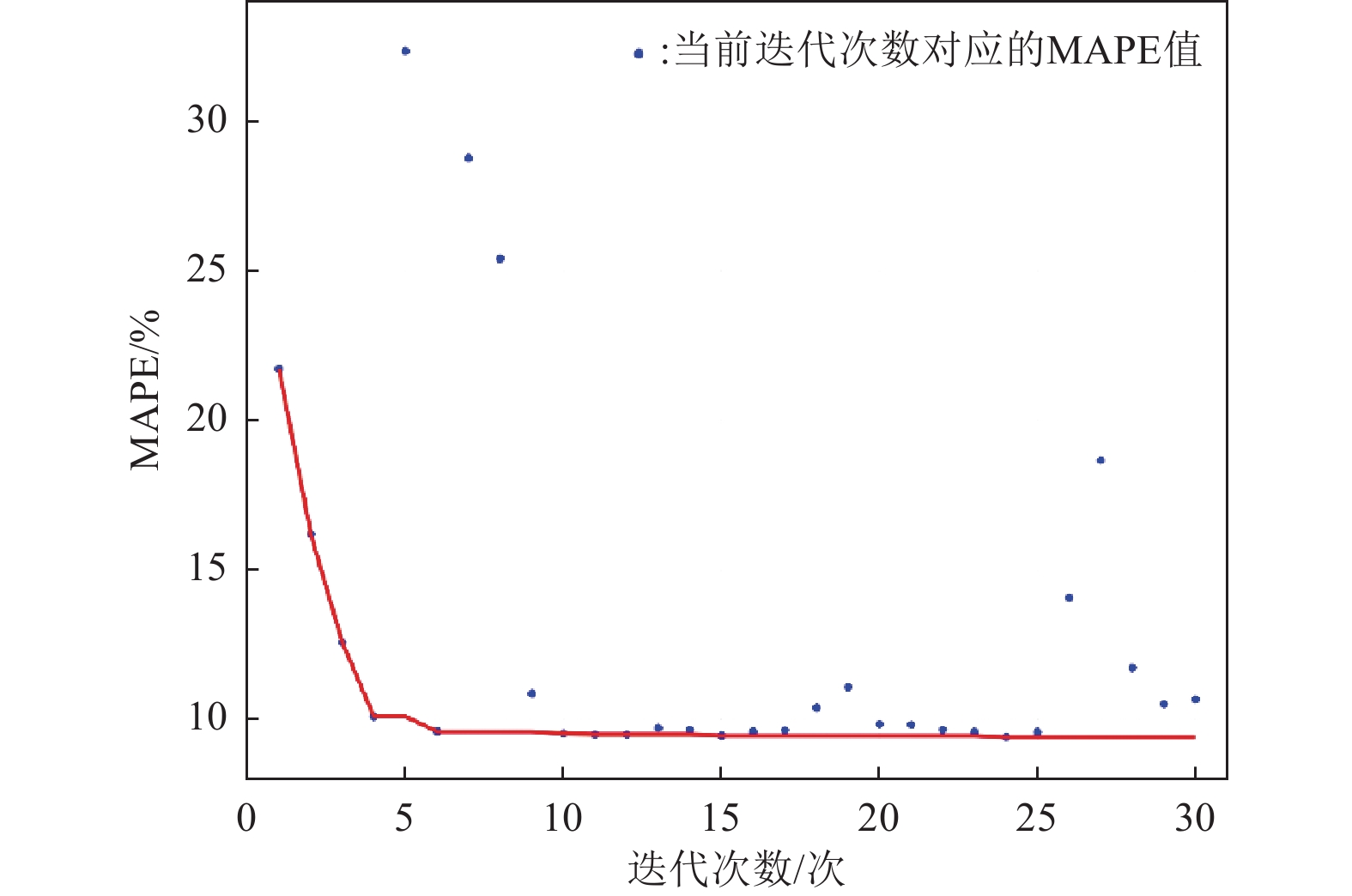
图 10 可变尺寸窗口网络收敛过程
Figure 10. Convergence process of the network with varia ble-size window
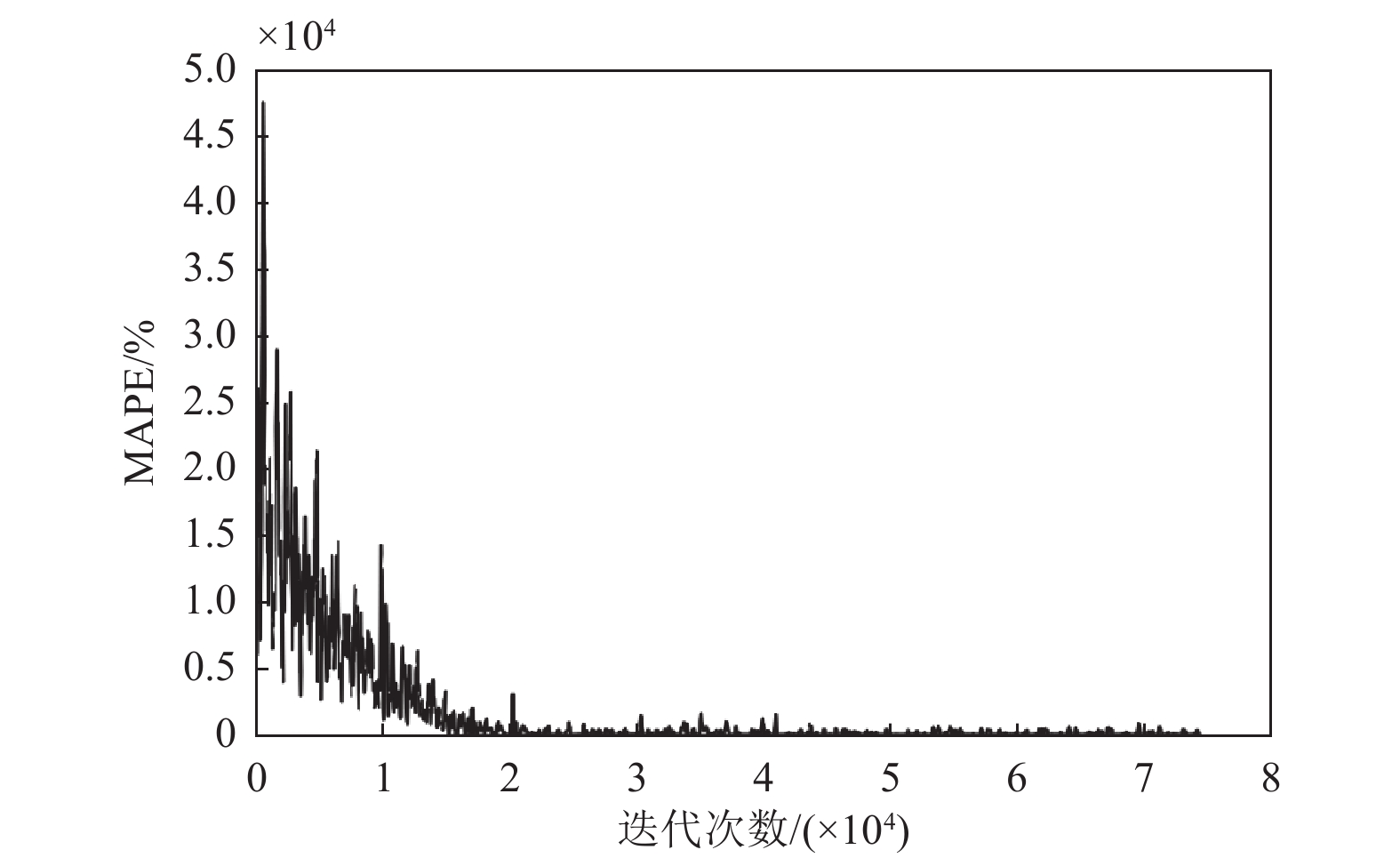
图 11 固定尺寸窗口网络收敛过程
Figure 11. Convergence process of the network with fixed-size window
表 1 结构自振周期与振动性质
Table 1. Natural periods and vibration modes of the structure
振型编号 振型特性 模拟周期/s 识别周期/s 周期误差 1 东西向 0.707 0.753 6.1% 2 南北向 0.699 0.744 6.0% 3 东西向 0.267 0.241 10.8% 4 南北向 0.257 0.238 8.0%  下载: 导出CSV
表 2 层间位移角
Table 2. Interstory drift angle
地震动名称 层间位移角 第1层 第2层 第3层 第4层 第5层 H-PG5090 0.007 551 0.012066 0.011781 0.007283 0.003124 EIL-EW 0.005 049 0.009330 0.011090 0.007285 0.003119 NSD180 0.005 677 0.009879 0.010576 0.007624 0.003424 ICC090 0.005 595 0.007814 0.007572 0.005468 0.002957 A-ELC180 0.005 814 0.007749 0.006156 0.003859 0.001819 2053b360 0.005 139 0.007650 0.006857 0.004534 0.002044 3914a235 0.004 907 0.007241 0.007151 0.005256 0.002572 H-SC2000 0.005 742 0.007143 0.005743 0.004065 0.002302 2037a090 0.004 225 0.006745 0.006181 0.004038 0.001836 0194 a090 0.004 500 0.006646 0.006321 0.004082 0.001724
下载: 导出CSV
表 3 CNN网络架构
Table 3. CNN architecture
层类型 激活函数 输出形状 InputLayer — (None,379,1) ResidualBlock×6 + Pooling×6 ReLU Downsampling GlobalAveragePooling1 D — (None,256) Dense ReLU (None, 36) Dropout — (None, 36) Dense Linear (None, 5)
下载: 导出CSV
表 4 训练环境
Table 4. Training environment
项目 配置 CPU Intel Xeon E5-1620 v4 @ 3.50 GHz GPU NVIDIA GeForce GTX 1080 Ti 内存 8 GB DDR4 @ 2400 MHz 硬盘 1.8 TB HDD 操作系统 Windows(DirectX 12) 软件 MATLAB R2025 a
下载: 导出CSV
表 5 训练集0514c090预测值
Table 5. Predicted values of training set 0514c090
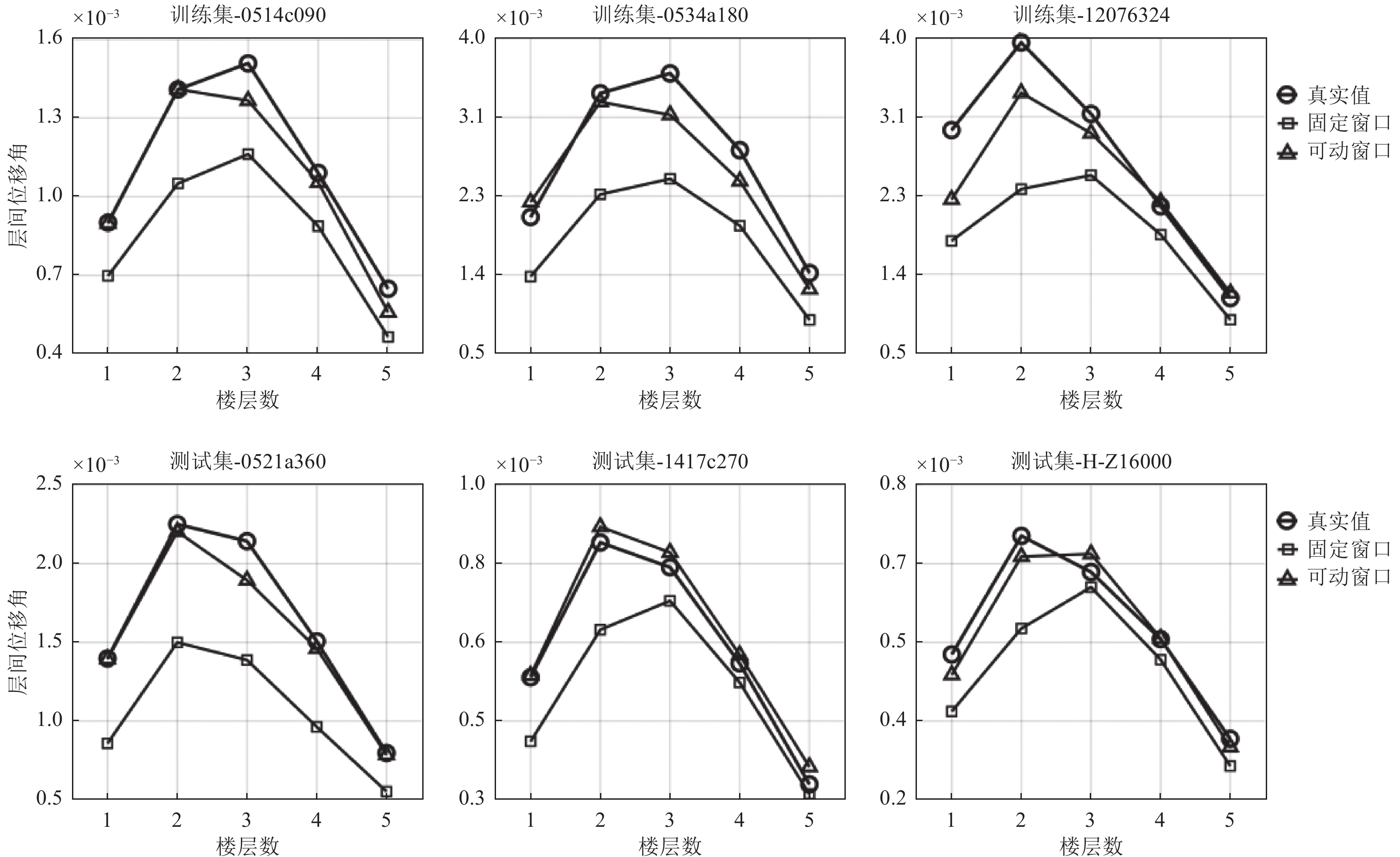
楼层 真实值/m 固定窗口预测值/m 固定窗口误差 可动窗口预测值/m 可动窗口误差 1 0.000901 0.000698 22.49% 0.000898 0.37% 2 0.001409 0.001051 25.44% 0.001410 0.04% 3 0.001509 0.001162 22.97% 0.001367 9.44% 4 0.001091 0.000887 18.65% 0.001055 3.32% 5 0.000649 0.000465 28.33% 0.000559 13.82%
下载: 导出CSV
表 6 训练集0534a180预测值
Table 6. Predicted values of training set 0534a180
楼层 真实值/m 固定窗口预测值/m 固定窗口误差 可动窗口预测值/m 可动窗口误差 1 0.002016 0.001355 32.79% 0.002183 8.28% 2 0.003393 0.002269 33.14% 0.003296 2.84% 3 0.003614 0.002441 32.46% 0.003152 12.78% 4 0.002760 0.001919 30.48% 0.002417 12.43% 5 0.001395 0.000872 37.47% 0.001214 12.94%
下载: 导出CSV
表 7 训练集
12076324 预测值Table 7. Predicted values of training set
12076324 楼层 真实值/m 固定窗口预测值/m 固定窗口误差 可动窗口预测值/m 可动窗口误差 1 0.002976 0.001743 41.42% 0.002205 25.91% 2 0.003953 0.002320 41.31% 0.003393 14.17% 3 0.003158 0.002475 21.63% 0.002942 6.83% 4 0.002129 0.001813 14.85% 0.002179 2.34% 5 0.001107 0.000864 21.91% 0.001162 4.98%
下载: 导出CSV
表 8 测试集0521a360预测值
Table 8. Predicted values of test sets 0521a360
楼层 真实值/m 固定窗口预测值/m 固定窗口误差 可动窗口预测值/m 可动窗口误差 1 0.001397 0.000858 38.60% 0.001393 0.29% 2 0.002251 0.001499 33.39% 0.002204 2.09% 3 0.002143 0.001387 35.27% 0.001894 11.62% 4 0.001507 0.000963 36.09% 0.001460 3.10% 5 0.000797 0.000552 30.80% 0.000785 1.56%
下载: 导出CSV
表 9 测试集1417c270预测值
Table 9. Predicted values of test sets 1417c270
楼层 真实值/m 固定窗口预测值/m 固定窗口误差 可动窗口预测值/m 可动窗口误差 1 0.000572 0.000430 24.91% 0.000576 0.78% 2 0.000872 0.000678 22.24% 0.000907 4.00% 3 0.000817 0.000742 9.14% 0.000850 4.04% 4 0.000603 0.000561 7.03% 0.000622 3.15% 5 0.000334 0.000312 6.49% 0.000373 11.68%
下载: 导出CSV
表 10 测试集H-Z16000预测值
Table 10. Predicted values of test sets H-Z16000
楼层 真实值/m 固定窗口预测值/m 固定窗口误差 可动窗口预测值/m 可动窗口误差 1 0.000477 0.000368 22.76% 0.000438 8.17% 2 0.000703 0.000527 25.11% 0.000664 5.60% 3 0.000634 0.000605 4.55% 0.000668 4.43% 4 0.000506 0.000467 7.71% 0.000507 0.28% 5 0.000316 0.000264 16.39% 0.000300 4.93%
下载: 导出CSV
-
陈佳, 丁永刚, 许启铿等, 2025. 基于改进附加质量的筒仓结构散-固耦合地震响应研究. 振动与冲击, 44(19): 288−297. doi: 10.13465/j.cnki.jvs.2025.19.032Chen J., Ding Y. G., Xu Q. K., et al., 2025. Seismic response of silo structure with grain-silo interaction based on improved added mass. Journal of Vibration and Shock, 44(19): 288−297. (in Chinese) doi: 10.13465/j.cnki.jvs.2025.19.032 陈吉龙, 潘汝江, 许成顺等, 2026. 液化侧向扩展场地群桩桥梁体系地震响应与失效模式研究. 震灾防御技术, 21(1): 132−145.Chen J. L., Pan R. J., Xu C. S., et al., 2026. Research on seismic response and failure modes of pile group bridge system in liquefaction-induced lateral spreading site. Technology for Earthquake Disaster Prevention, 21(1): 132−145. (in Chinese) 郭茂祖, 闫济丞, 张庆宇等, 2025. 长短期频域特征嵌入的建筑结构地震响应预测. 建筑结构学报, 46(11): 223−236, 249.Guo M. Z., Yan J. C., Zhang Q. Y., et al., 2025. Long-short term frequency domain feature embedding for predicting seismic response of building structures. Journal of Building Structures, 46(11): 223−236,249. (in Chinese) 黄敏沾, 彭玉祥, 蒋镇涛等, 2026. 基于物理信息神经网络的薄板静力响应计算模型. 哈尔滨工程大学学报, 47(1): 96−105.Huang M. Z., Peng Y. X., Jiang Z. T., et al., 2026. Computational models for static response of thin plates based on physics-informed neural networks. Journal of Harbin Engineering University, 47(1): 96−105. (in Chinese) 李雨润, 王铭, 邵鼎松等, 2025. 液化场地中高层建筑-桩筏基础-地下结构体系地震响应离心振动台试验研究. 震灾防御技术, 20(3): 486−497.Li Y. R., Wang M., Shao D. S., et al., 2025. Centrifugal shaking table test on seismic response of high-rise building pile raft foundation underground structure system in liquefaction site. Technology for Earthquake Disaster Prevention, 20(3): 486−497. (in Chinese) 李正农, 顾珂泽, 黄斌等, 2024. 地震作用下结构响应实时预测方法研究. 振动与冲击, 43(22): 62−69.Li Z. N., Gu K. Z., Huang B., et al., 2024. Real-time prediction method of structural responses under earthquake action. Journal of Vibration and Shock, 43(22): 62−69. (in Chinese) 许泽坤, 陈隽, 2021. 非线性结构地震响应的神经网络算法. 工程力学, 38(9): 133−145.Xu Z. K., Chen J., 2021. Neural network algorithm for nonlinear structural seismic response. Engineering Mechanics, 38(9): 133−145. (in Chinese) 薛建阳, 凌怀泉, 戚亮杰等, 2024. 传统风格建筑塔式结构振动台试验及动力分析. 建筑结构学报, 45(12): 19−30.Xue J. Y., Ling H. Q., Qi L. J., et al., 2024. Shaking table test and dynamic analysis on a tower structure in traditional style building. Journal of Building Structures, 45(12): 19−30. (in Chinese) 郑史雄, 雷川鹤, 贾宏宇等, 2025. 基于LSTM的近断层桥梁地震响应和易损性快速预测方法. 中国公路学报, 38(7): 18−30.Zheng S. X., Lei C. H., Jia H. Y., et al., 2025. LSTM-based method for fast prediction of seismic response and vulnerability of near-fault bridges. China Journal of Highway and Transport, 38(7): 18−30. (in Chinese) Ding Y. J., Wang Z. C., Wang Y., et al., 2026. CNN-BiLSTM hybrid neural network with attention mechanism for structural nonlinear model updating. Journal of Bridge Engineering, 31(5): 04026019. Du J. J., Wang W., Zhang J. C., et al., 2026. Seismic response of a prefabricated substation equipment cabin with base isolation: full-scale shaking table test and numerical analysis. Structures, 86: 111328. Guo X., Li W. J., Qiao J. F., 2023. A self-organizing modular neural network based on empirical mode decomposition with sliding window for time series prediction. Applied Soft Computing, 145: 110559. Liao Y. Y., Tang H. S., Li R. S., et al., 2023. Response prediction for linear and nonlinear structures based on data-driven deep learning. Applied Sciences, 13(10): 5918. Liu B., Gong M. S., Wang X. M., et al., 2026. Physics-guided neural network for structural seismic response reconstruction based on floor response spectra. Journal of Building Engineering, 118: 114972. Pamuncak A. P., Salami M. R., Adha A., et al., 2021. Estimation of structural response using convolutional neural network: application to the Suramadu Bridge. Engineering Computations, 38(10): 4047−4065. Shu J. P., Dong T. F., Li J., et al., 2026. Data-driven convolutional neural network model with multi-channel input framework for predicting structural displacement response. Advances in Structural Engineering, 29(6): 1047−1061. Wang J. S., Xie Y. Z., Guo T., et al., 2023. Predicting the influence of soil–structure interaction on seismic responses of reinforced concrete frame buildings using convolutional neural network. Buildings, 13(2): 564. Wang Y., Li X. J., Wang X. H., et al., 2025. Asymmetric structural response characteristics of transmission tower-line systems under cross-fault ground motions revealed by shaking table tests. Symmetry, 17(10): 1646. Zhou Y., Meng S. Q., Lou Y. J., et al., 2024. Physics-informed deep learning-based real-time structural response prediction method. Engineering, 35: 140−157. -

 点击查看大图
计量
- 文章访问数: 28
- HTML全文浏览量: 11
- PDF下载量: 30
- 被引次数: 0
