

Experience and Enlightenment of the Construction of Emergency Shelters in Schools of Japan
-
摘要: 面对我国灾害频发与应急避难场所建设推进缓慢的现实困境,借助中小学校、体育馆等大型公共建筑,建设平灾两用的室内型、综合性避难场所是我国现代化城市防灾减灾工作的发展趋势。本文以日本应急避难场所为研究对象,通过查阅大量日本政府报告、相关学术论文及政策文件资料,系统概述了日本学校类应急避难场所建立的发展历程,重点梳理了其在选址、建设与运营等方面的成熟经验以及常态化防灾准备与应急响应中的创新举措。同时对比分析我国学校类应急避难场所的发展现状。研究发现,相较于日本学校类应急避难场所,我国在建设标准、设施配置、运营管理方面存在明显不足,未来应细化建设标准与技术要求,并通过推广优秀案例为实践提供参考;完善设施配置,构建人性化、高质量的避难环境;优化应急引导标识系统,提升居民避难响应效率;强化非结构构件的防灾性能,提供安全避难环境;构建政府、社区、学校多元协同机制,确保应急避难场所的可持续运营。Abstract: China faces frequent natural disasters and slow progress in emergency shelter construction. In this context, developing dual-use indoor and comprehensive shelters within large public buildings—such as primary and secondary schools and gymnasiums—has become an important direction for disaster risk reduction in Chinese cities and towns. To learn from international experience and promote the high-quality development of emergency shelters in China, this study examines Japanese school-based emergency shelters. By reviewing Japanese government reports, academic publications, and policy documents, it systematically traces the institutional development of school-based emergency shelters and summarizes Japan’s mature practices in site selection, construction, and operation, as well as its innovative measures for routine disaster preparedness and emergency response. These practices are then compared with the current development of school emergency shelters in China. The study finds that Chinese school emergency shelters lag behind their Japanese counterparts in construction standards, facility provision, and operational management. Future efforts should therefore refine relevant standards and technical requirements, disseminate exemplary practices, and improve shelter facilities to create inclusive and high-quality refuge environments. In addition, emergency guidance and signage systems should be optimized to improve evacuation efficiency, the disaster resilience of non-structural components should be enhanced to ensure a safe refuge environment, and a coordinated mechanism involving government agencies, communities, and schools should be established to support the sustainable operation of emergency shelters.
-
Key words:
- Emergency shelter /
- School /
- Japan /
- Emergency dual use /
- Disaster prevention and mitigation
1)1 2 日本气象厅设定震度由弱到强分别为0~4、5弱、5强、6弱、6强以及7,共10个等级。2)2 3 福祉型避难所:为需要特殊照顾且在普通庇护所生活有困难的人提供的有特殊照顾的避难所。 -
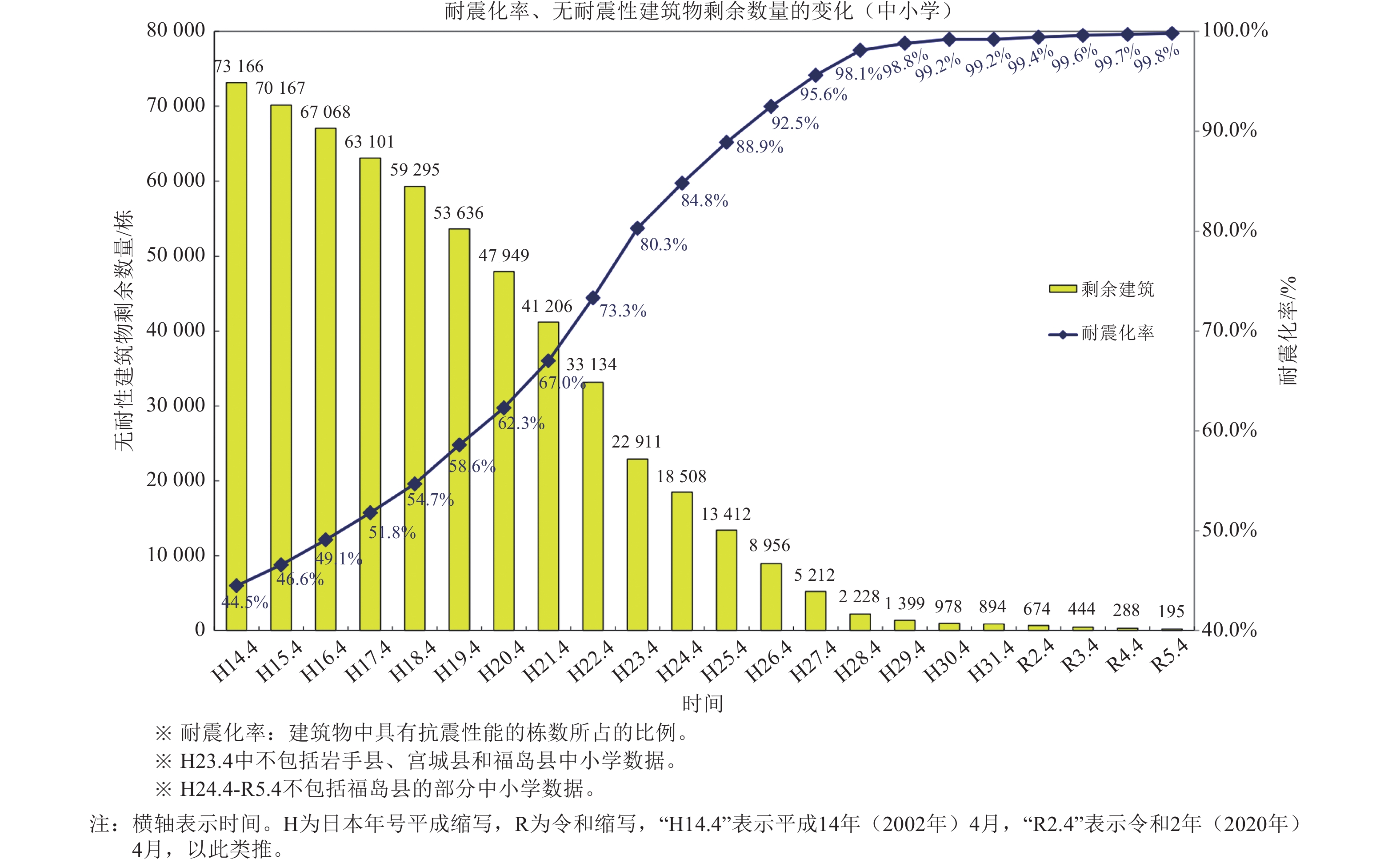
图 3 日本中小学耐震化率、无耐震性建筑物剩余数量变化情况 (文部科学省,2023b)
Figure 3. Variations of the seismic resistance rate of Japanese primary and secondary schools, and the remaining number of buildings without seismic resistance(文部科学省,2023b)
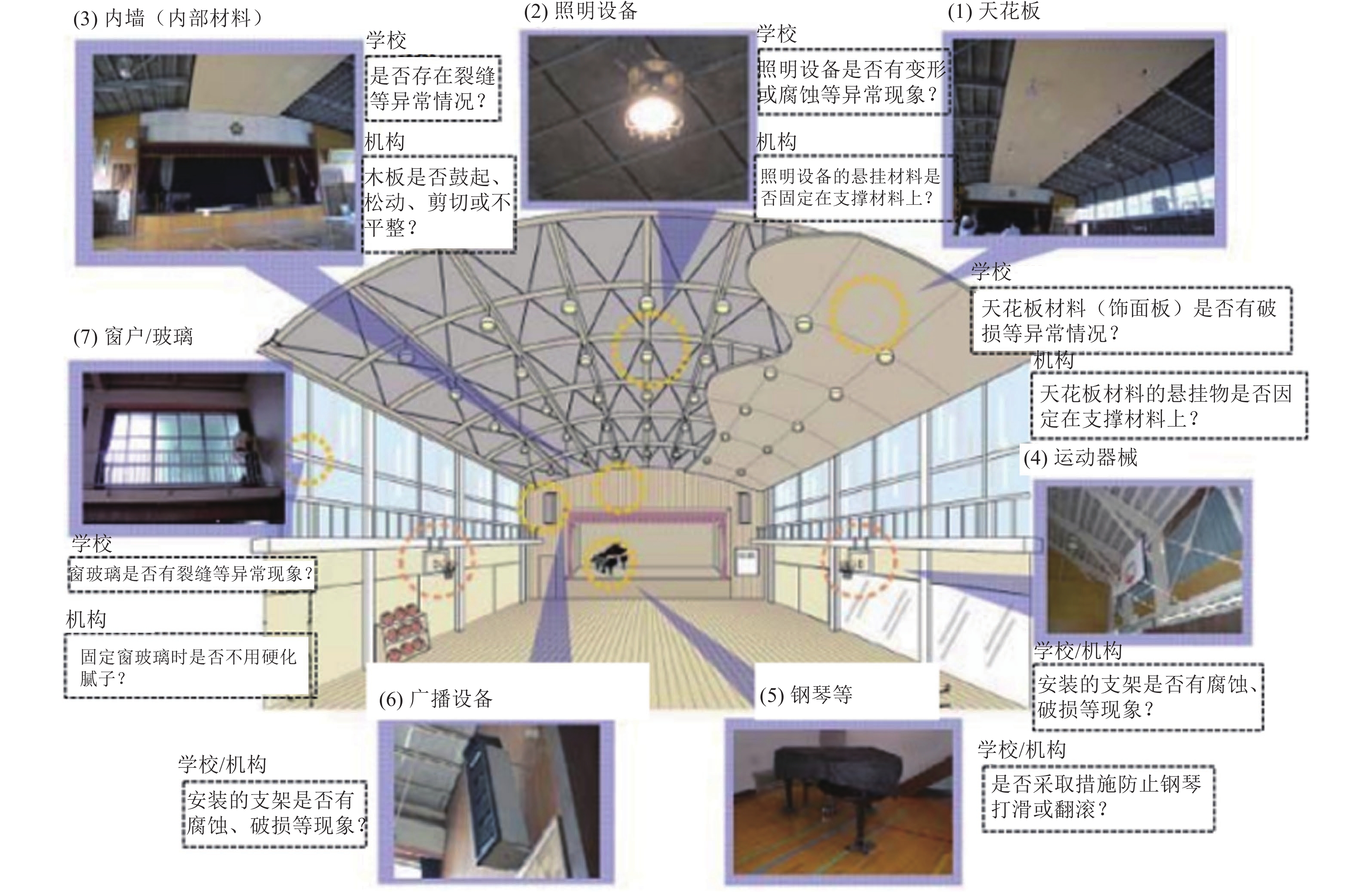
图 4 检查项目举例(文部科学省,2015)
Figure 4. Example of inspection items(文部科学省,2015)
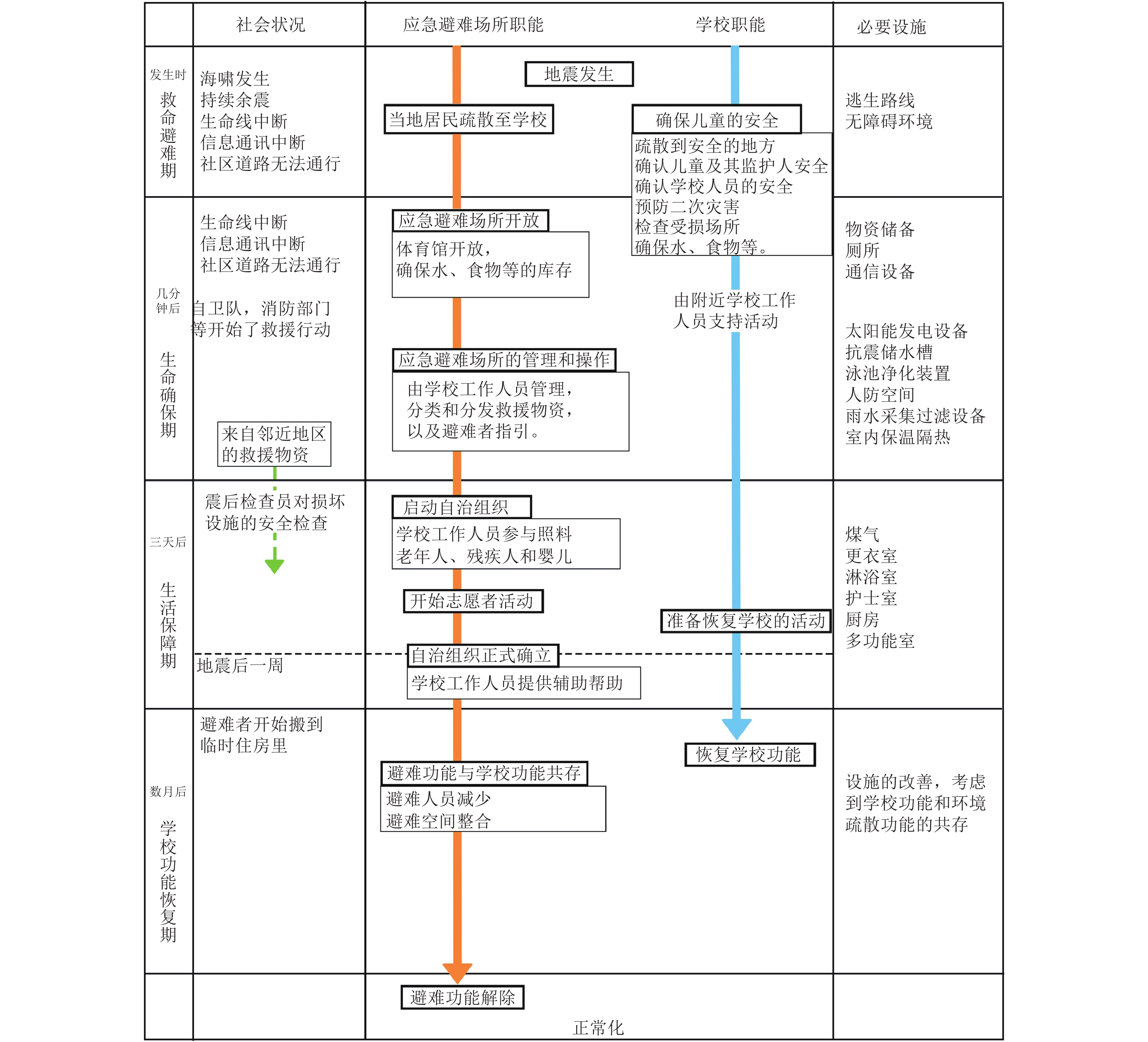
图 11 日本应急避难场所分阶段运行管理细则
Figure 11. Detailed rules for the phased operation of emergency shelters in Japan
表 1 日本文部科学省发布的学校类防灾避难相关指南计划
Table 1. Guidelines for disaster prevention and evacuation in schools issued by the Ministry of Education, Culture, Sports, Science and Technology
分类维度 名称 主要内容 防灾避难体系建立 《防灾事务计划》(文部科学省,2023c) 针对地震、海啸、风害、水灾、核灾5种灾害,从平时预防(定期演练、设施检查、安全教育等)、灾时应对(提供物资、疏散引导等)、灾后重建及全过程管理等方面,系统规定文部科学省管辖事务中的防灾事项,全面推动防灾工作。 防灾避难工作推进 《学校设施非结构构件抗震指南》(文部科学省,2015) 提供非结构构件检查清单,要求学校每学期检查非结构性部件的老化情况(如生锈、裂缝等),每年核查教学设备的抗震措施落实情况,帮助评估非结构构件危险性并制定预防措施,防止地震时非结构构件对避难人群造成伤害。 《基于洪水风险的学校设施防洪措施推广指南》(文部科学省,2023a) 提出绘制洪水预期淹没图、加盖防泥沙外墙、开发雨水储存渗透设施等防洪措施,明确学校与地方政府合作评估洪水风险、审查防洪设施的程序,促进跨部门协作。 《学校设施抗震推广指南》(MEXT,2003) 提出学校应对地震的基本措施,指导学校通过抗震性能调查和评估确定抗震工程的紧急程度,帮助学校逐步提升设施抗震能力。 《学校无障碍设施推广指南》(MEXT,2004) 提出学校设施无障碍化的设计要点和注意事项,推动无障碍学校设施作为应急避难场所,确保特殊人群的避难需求得到满足。 《学校危机管理手册制作指南》(文部科学省,2018a) 提供应对各类事故和突发事件的基本措施及注意事项,指导各学校根据地区特点和实际情况编制本校的危机管理手册。 防灾避难恢复 《学校设施灾后恢复成本调查指南》(文部科学省,2017) 提出公立、私立学校设施及公共教育设施的灾害恢复成本调查要点,包括修复费用计算原则、标准以及建筑物损坏的分类等,为灾后恢复提供依据。 防灾避难保障 《灾害援助计划》(文部科学省,2024) 明确灾后各类学校可获得的补助金额及援助负责部门,为学校灾后恢复提供资金和政策支持。  下载: 导出CSV
-
陈静香, 2010. 日本中小学校建筑抗震防灾经验研究. 广州: 华南理工大学.Chen J. X., 2010. Study of anti-seismic experiences of school buildingsin Japan. Guangzhou: South China University of Technology. (in Chinese) 郭偕行, 2011. 中小学校舍抗震性能提升的建筑学应对策略探讨. 西安: 西安建筑科技大学.Guo K. X., 2011. Small and medium-sized school buildings aseismic performance strategies discussed the ascension of architecture. Xi'an: Xi'an University of Architecture and Technology. (in Chinese) 姜连艳, 2019. “平灾结合”推进室内地震应急避难场所建设的策略研究. 震灾防御技术, 14(4): 838−845.Jiang L. Y., 2019. Research on promotion strategy of indoor emergency earthquake shelters based on integration for normal time and disaster time. Technology for Earthquake Disaster Prevention, 14(4): 838−845. (in Chinese) 李志民, 周崐, 李曙婷, 2009. 日本中小学校建筑抗震设计研究. 城市建筑, (3): 23−25. doi: 10.3969/j.issn.1673-0232.2009.03.006Li Z. M., Zhou K., Li S. T., 2009. The architectural research of seismic design for the primary and secondary schools. Urbanism and Architecture, (3): 23−25. (in Chinese) doi: 10.3969/j.issn.1673-0232.2009.03.006 辛方正, 马源鸿, 付本臣, 2023. 兼顾城市应急功能的校园设计−−以日本为例. 世界建筑, (9): 28−33. doi: 10.3969/j.issn.1002-4832.2023.09.006Xin F. Z., Ma Y. H., Fu B. C., 2023. Campus design with urban emergency functions: a case study of Japan. World Architecture, (9): 28−33. (in Chinese) doi: 10.3969/j.issn.1002-4832.2023.09.006 张秀彦, 李轶杰, 王志涛, 2022. 东日本地震学校类避难场所启用分析及启示. 武汉理工大学学报(信息与管理工程版), 44(5): 709−717. doi: 10.3963/j.issn.2095-3852.2022.05.003Zhang X. Y., Li Y. J., Wang Z. T., 2022. Utilization of school shelters in east Japan earthquake and its enlightenment. Journal of Wuhan University of Technology (Information & Management Engineering), 44(5): 709−717. (in Chinese) doi: 10.3963/j.issn.2095-3852.2022.05.003 张子文, 2018. 低烈度区暨有教学楼兼做避难所关键技术研究. 唐山: 华北理工大学.Zhang Z. W., 2018. The key technology research on transforming existing teaching buildings into shelters in low intensity areas. Tangshan: North China University of Science and Technology. (in Chinese) 文部科学省, 2015. 学校施設の非構造部材の耐震化ガイドブック(改訂版). (2015-03)[2025-05-07]. https://www.mext.go.jp/a_menu/shisetu/shuppan/1291462.htm. 文部科学省, 2017. 公立学校施設の災害復旧について. (2017-05-08)[2025-05-07]. https://www.mext.go.jp/a_menu/shisetu/bousai/011101.htm. 文部科学省, 2018a. 学校の「危機管理マニュアル」等の評価・見直しガイドラインについて. (2018-02)[2025-05-07]. https://www.mext.go.jp/a_menu/kenko/anzen/1401870_00002.htm. 文部科学省, 2018b. 近年の災害から学ぶ避難所となる学校施設について~バリアフリー化の取組事例集~.(2018-03)[2025-05-07]. https://www.mext.go.jp/a_menu/shisetu/shuppan/1403195.htm. 文部科学省, 2023a. 「水害リスクを踏まえた学校施設の水害対策の推進のための手引」の公表について. (2023-05-30)[2025-05-07]. https://www.mext.go.jp/b_menu/shingi/chousa/shisetu/063/toushin/mext_00002.html. 文部科学省, 2023b. 公立学校施設の耐震改修状況フォローアップ調査結果.(2023-08-08)[2025-05-07]. https://www.mext.go.jp/b_menu/houdou/2023/attach/1419961_00002.html. 文部科学省, 2023c. 文部科学省防災業務計画. (2023-09-01)[2025-05-07]. https://www.mext.go.jp/a_menu/shisetu/gyoumu/1329040.htm. 文部科学省, 2024. 災害に関する支援制度について. [2025-05-07]. https://www.mext.go.jp/content/20210707-mxt_kouhou-02-000016657_1.pdf. MEXT, 2003. Guidelines for promotion of earthquake-resistance school building. (2003-07)[2025-05-07]. https://www.nier.go.jp/shisetsu/pdf/e-taishinsuishin.pdf. MEXT, 2004. Barrier-free school facility promotion guideline. (2004-03)[2025-05-07]. https://www.nier.go.jp/shisetsu/pdf/e-bariashishin.pdf. MEXT, 2006. Seismic retrofitting quick reference school facilities that withstand earthquakes examples of seismic retrofitting. (2006-09)[2025-05-07]. https://inee.org/sites/default/files/Seismic_Retrofitting.pdf. MEXT, 2011. Urgent recommendation “concerning school facility improvement in light of the damage caused by the great east Japan earthquake”. (2011-07)[2025-05-07]. https://www.nier.go.jp/shisetsu/pdf/e_Urgent_Recommendationl_Body.pdf. MEXT, 2014. Ideal state of disaster-resilient school facilities. (2014-03)[2025-05-07]. https://www.nier.go.jp/shisetsu/pdf/e-disaster-resilient.pdf. -


 点击查看大图
计量
- 文章访问数: 59
- HTML全文浏览量: 40
- PDF下载量: 4
- 被引次数: 0
