


Study on Time-Frequency Characteristics of Ground Vibration in Sand Liquefaction Sites
-
摘要: 砂土液化场地的地震动特性研究对于重大工程抗震设防具有重要意义。基于新西兰2010—2011年地震序列的地震动记录,对比分析强震动观测台站场地在液化与非液化事件中的地震动特性,利用希尔伯特-黄变换(Hilbert-Huang Transform,HHT)进行时频分析,揭示了液化对地震波频谱的影响特征。结果表明,液化场地的地震动加速度时程具有显著的“尖刺”谐波振荡现象。通过时频图中特定频率成分的变化,即中高频成分显著减少,低频成分占据主导地位,能够有效确定场地进入液化状态的时刻。基于美国野生动物园液化台阵(Wildlife Liquefaction Array, WLA)的数据资料,结合对应的孔压监测数据,验证了地震动记录时频图中频率成分变化表征液化触发时间的可行性,对基于地表强震动记录判定场地砂土液化状态具有较好的指征意义。Abstract: The characterization of ground motions at sand liquefaction sites is important for the seismic fortification of major engineering projects. Based on ground motion records from the 2010–2011 Canterbury earthquake sequence in New Zealand, this study compares the ground motion characteristics of strong-motion station sites during liquefaction and non-liquefaction events. Time–frequency analysis using the Hilbert–Huang transform (HHT) is performed to identify the influence of liquefaction on seismic wave spectra. The results show that acceleration time histories at liquefied sites exhibit distinctive spiky, harmonic-like oscillations. Analysis of frequency-component variations in the time–frequency representations, particularly the significant attenuation of mid- to high-frequency components and the dominance of low-frequency components, indicates that the frequency-drop feature can be used to determine the onset time of site liquefaction. Validation using records from the Wildlife Liquefaction Array (WLA) in the United States, together with corresponding pore-pressure monitoring data, confirms the feasibility of characterizing liquefaction triggering time based on frequency-component changes in ground motion time–frequency diagrams. These findings provide useful diagnostic indicators for identifying sand liquefaction from surface strong-motion records.
-
Key words:
- Sand liquefaction /
- Ground motion record /
- Time-frequency analysis /
- Hilbert transform
-
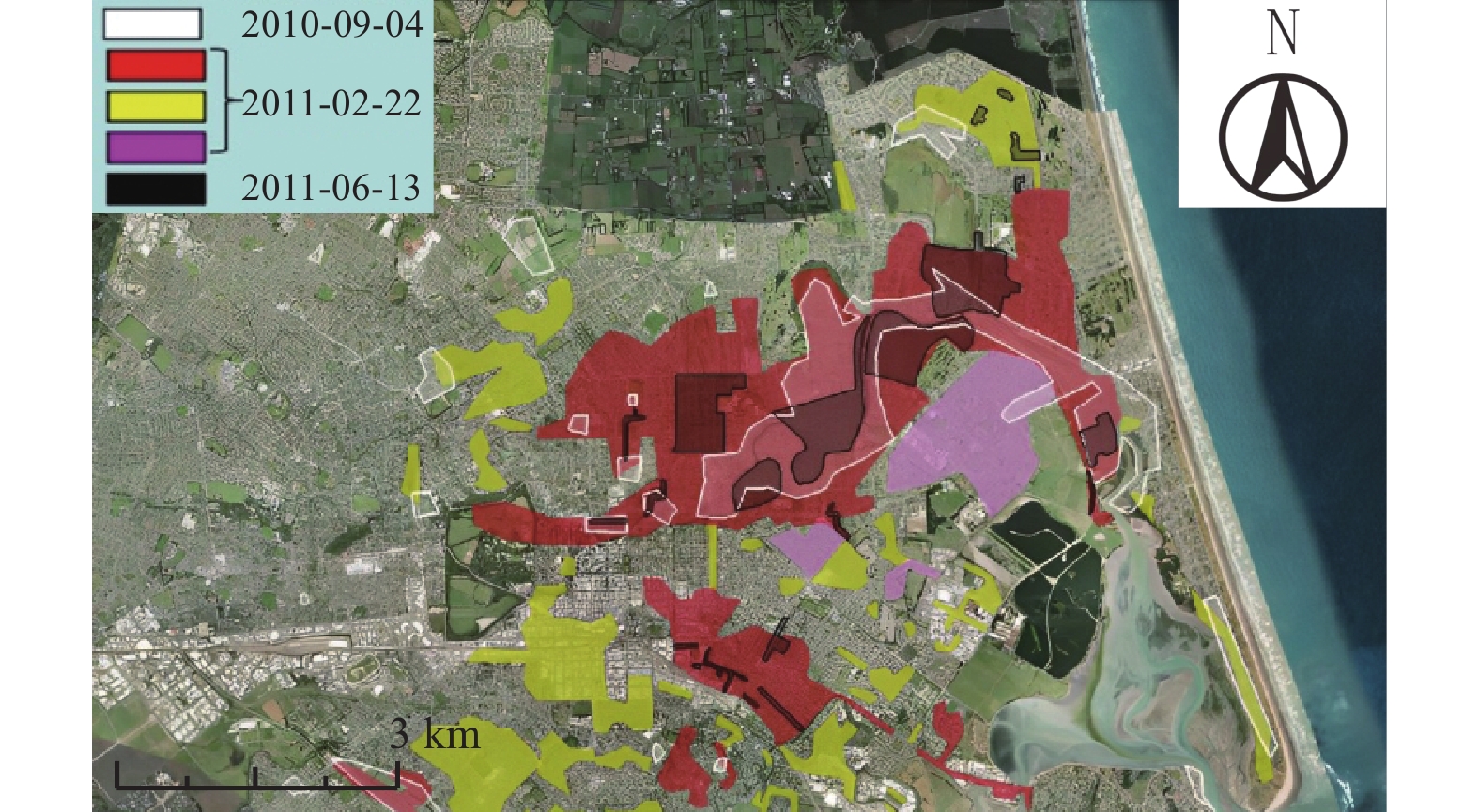
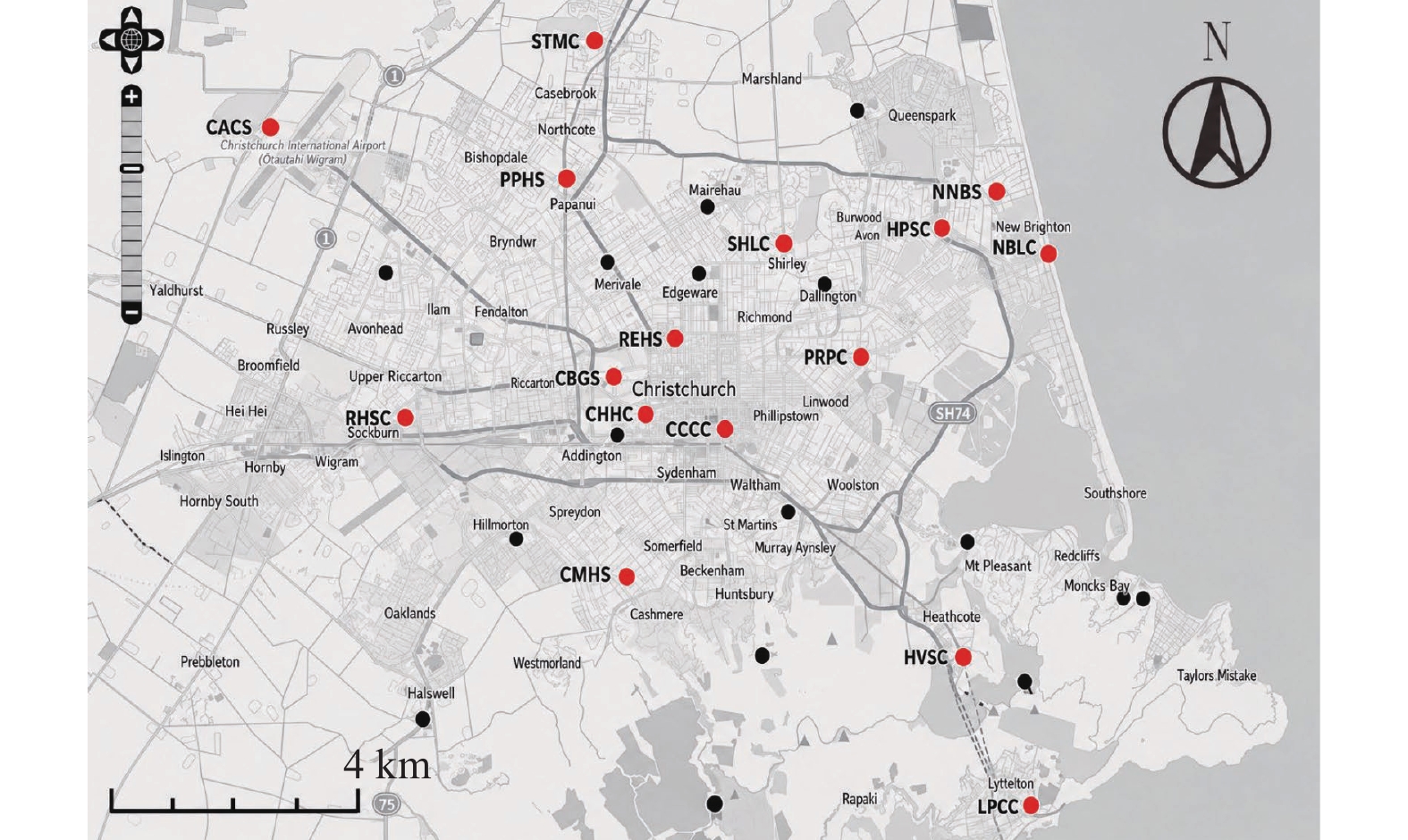
图 1 新西兰地震序列引起的基督城液化区域分布图
Figure 1. Map of liquefaction distribution in Christchurch city caused by the New Zealand earthquake sequence
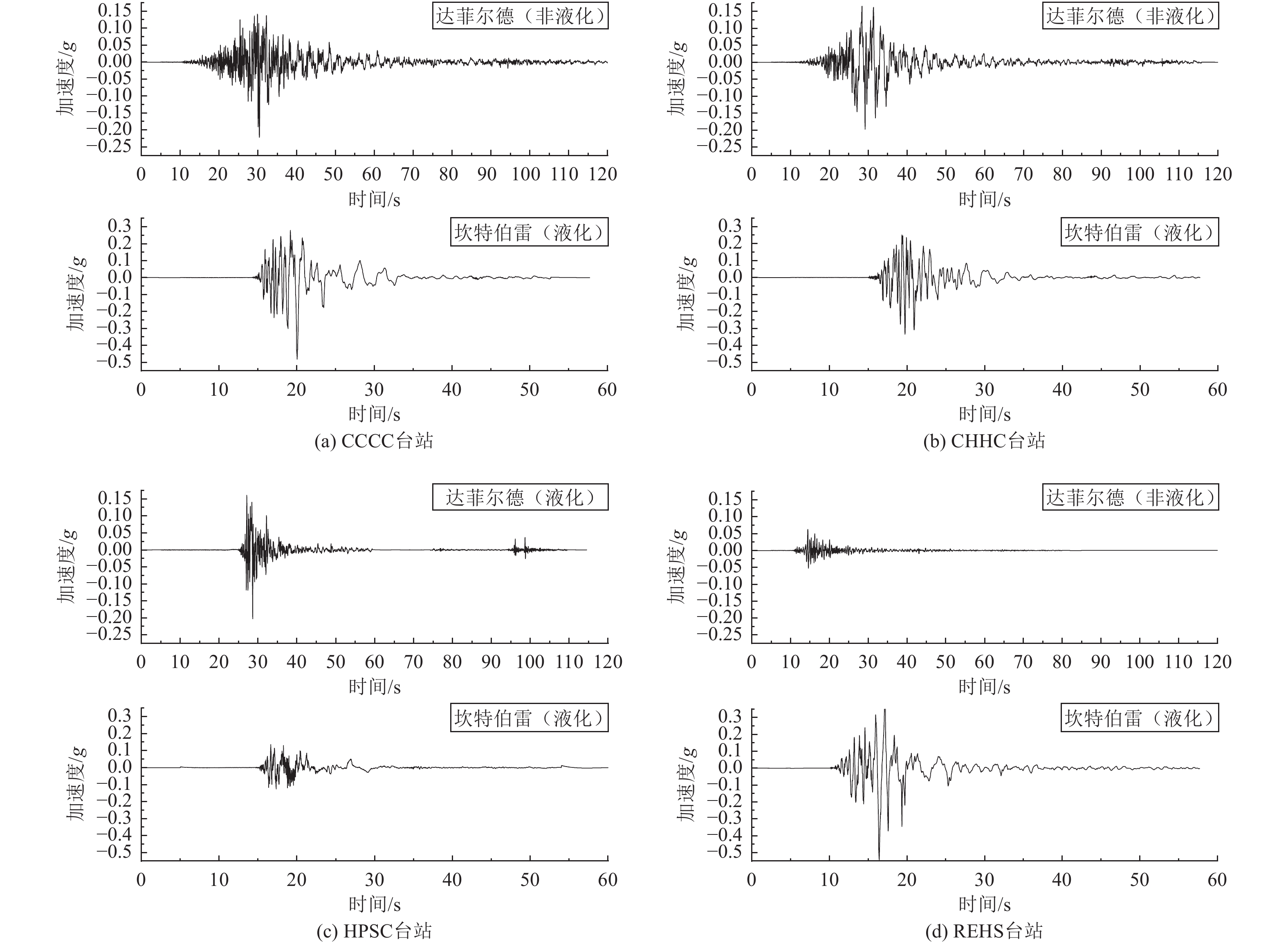
图 3 部分台站两次地震的加速度时程图
Figure 3. Acceleration time history of two earthquakes at each station
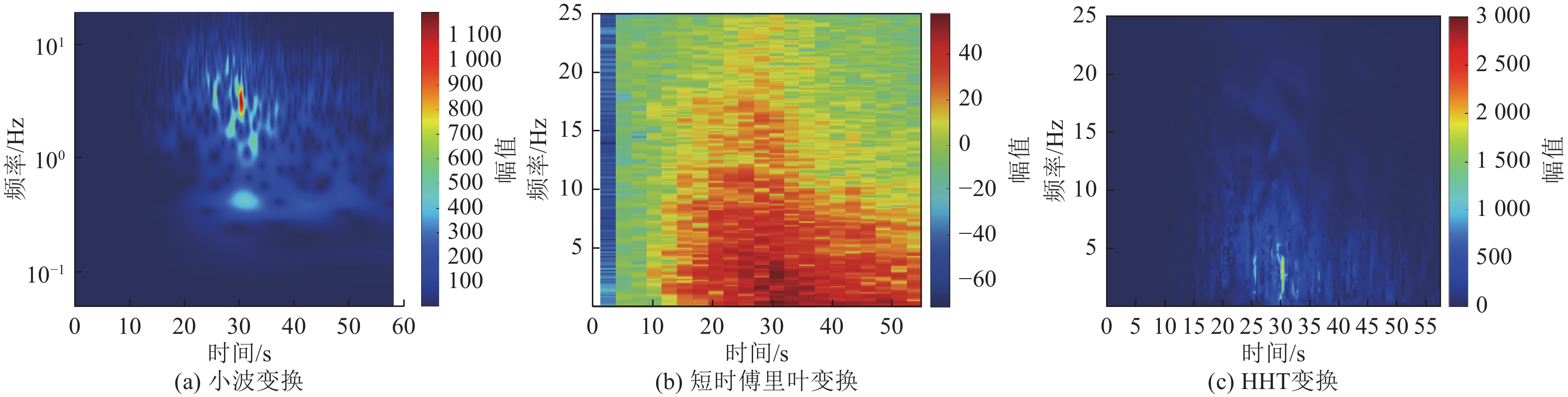
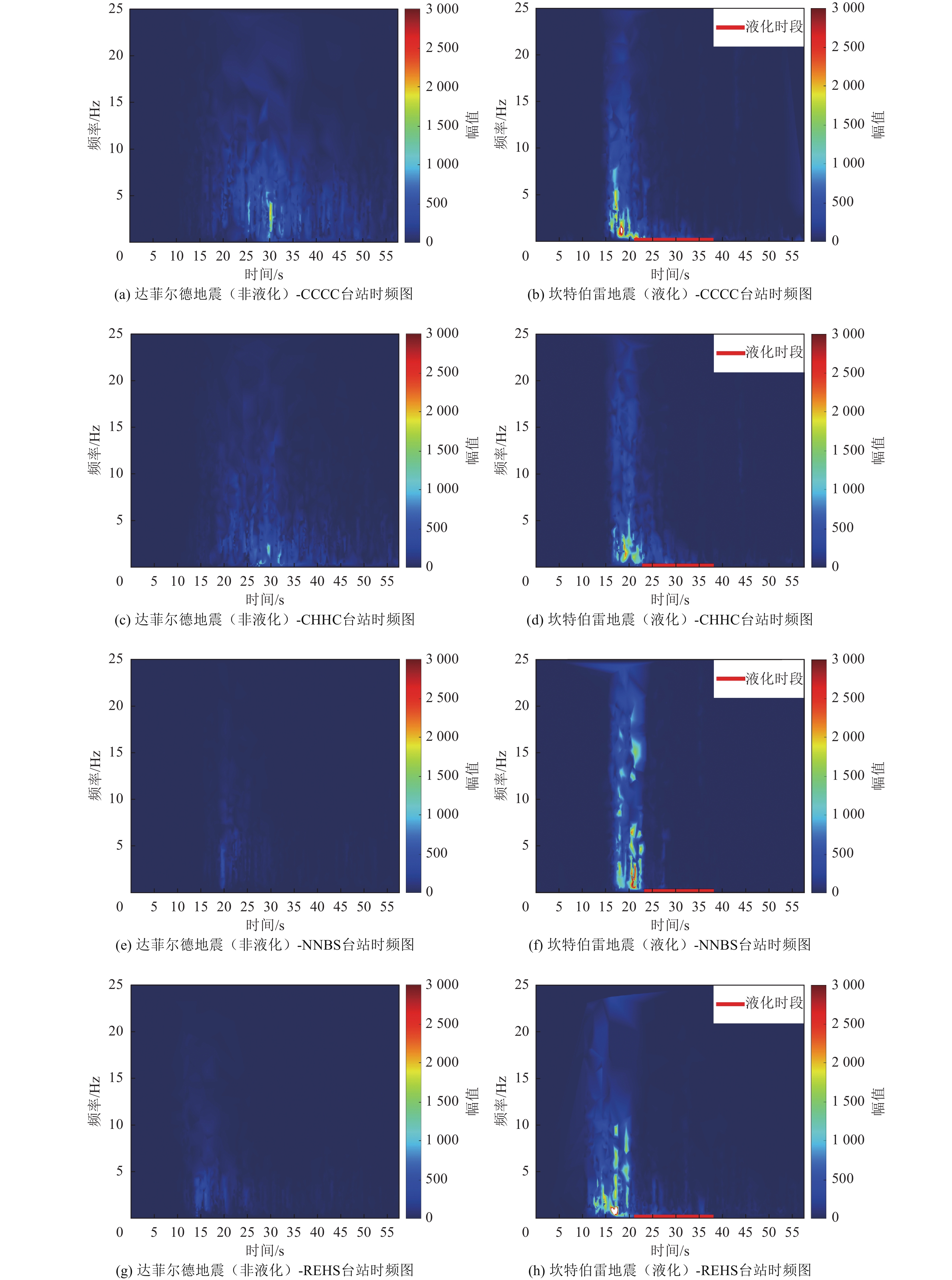
图 4 CCCC台站不同时频变换效果图
Figure 4. Effect of different time-frequency conversion of CCCC stations
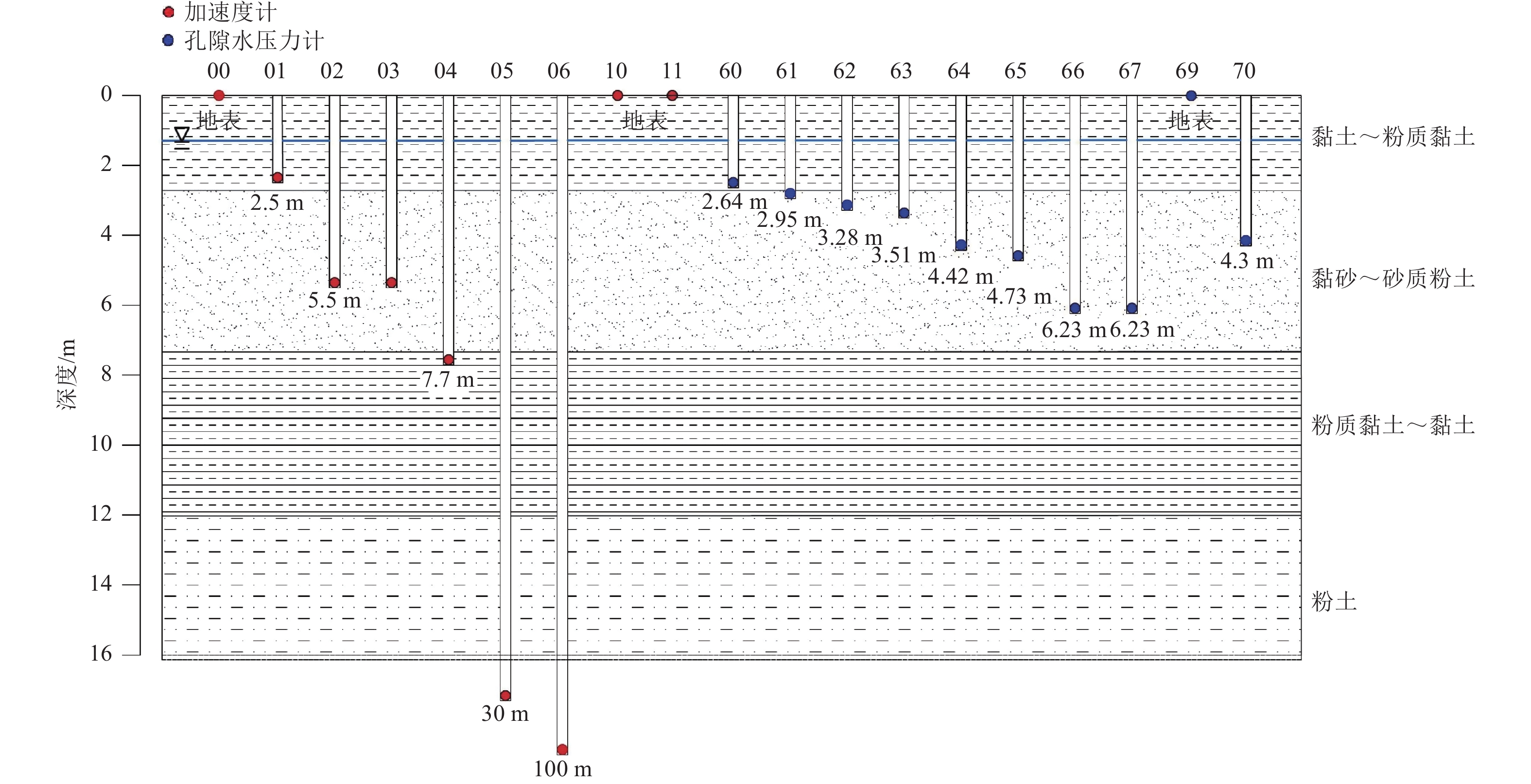
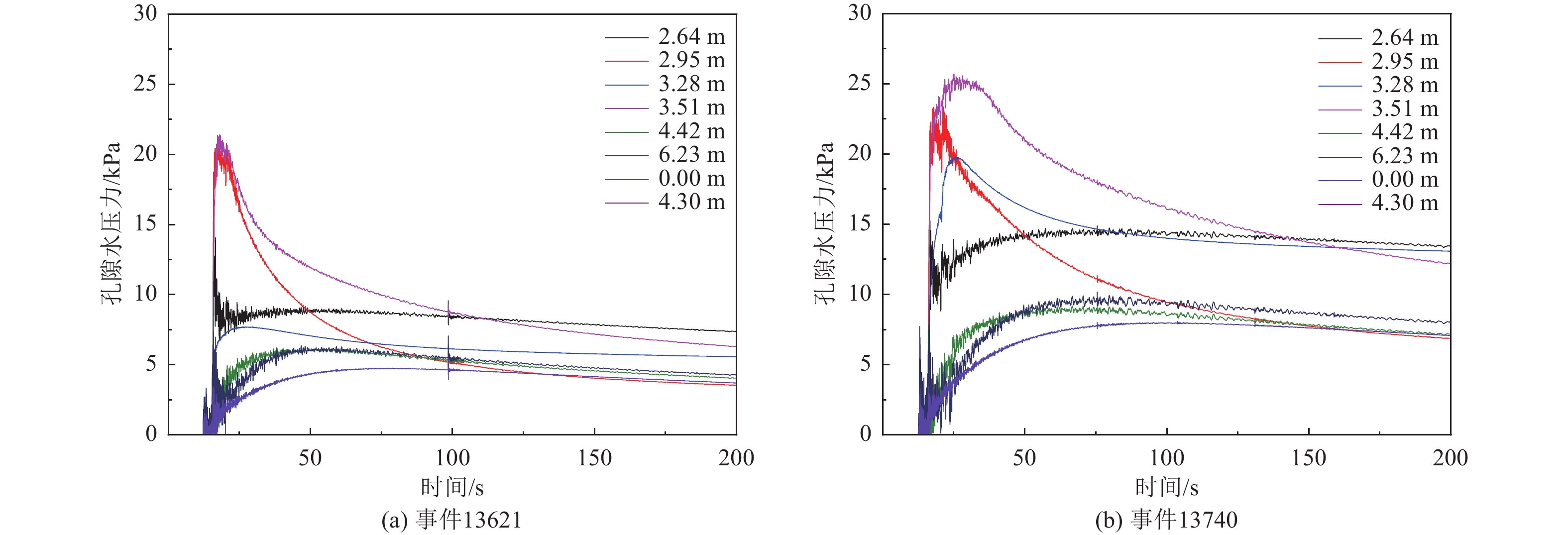
图 6 新台站的土层情况以及传感器布设剖面图
Figure 6. Section diagram of sensor layout andstrata condition of the new station
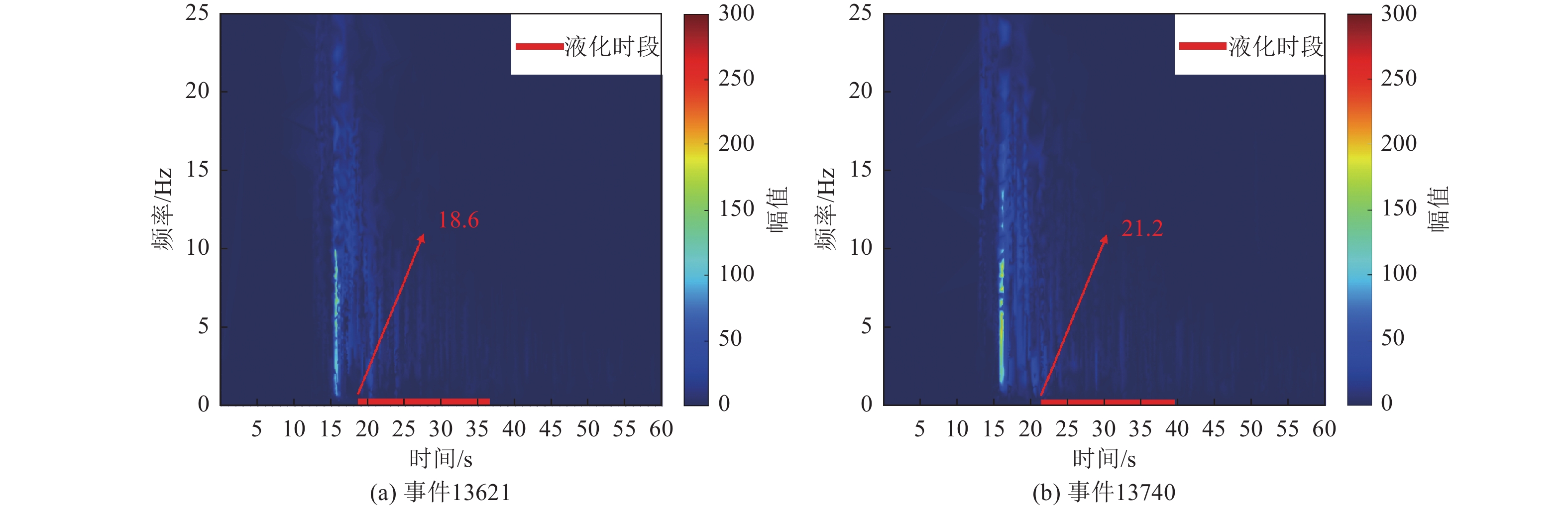
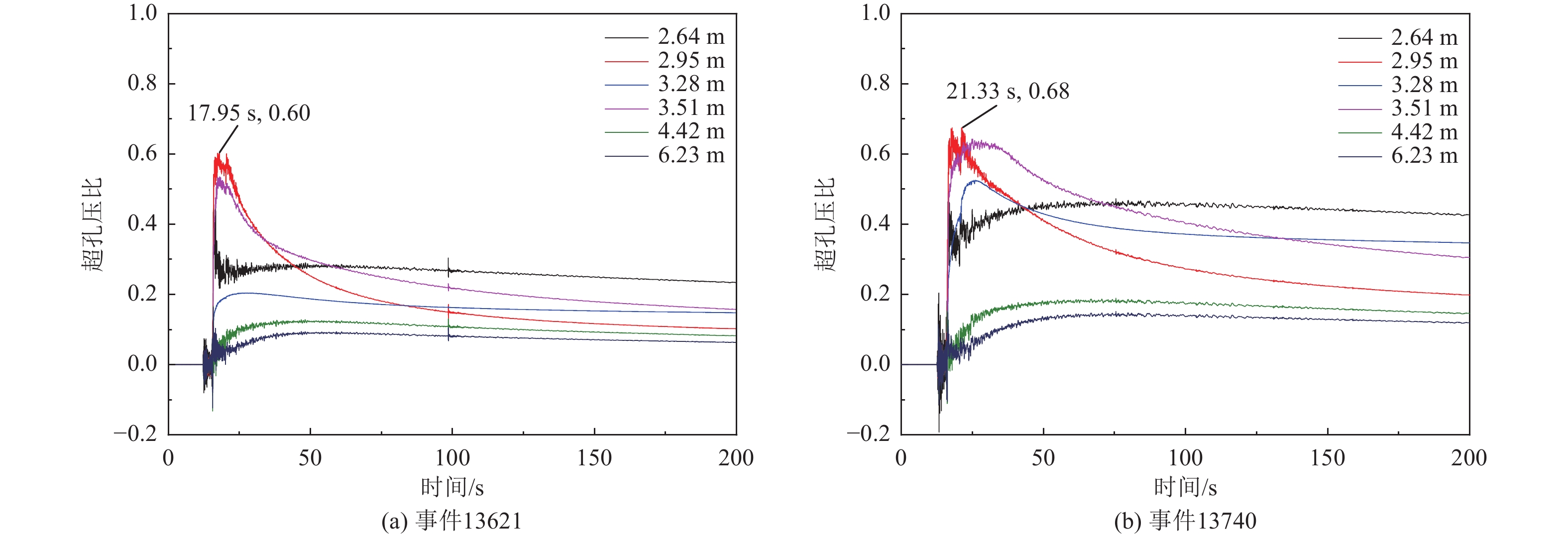
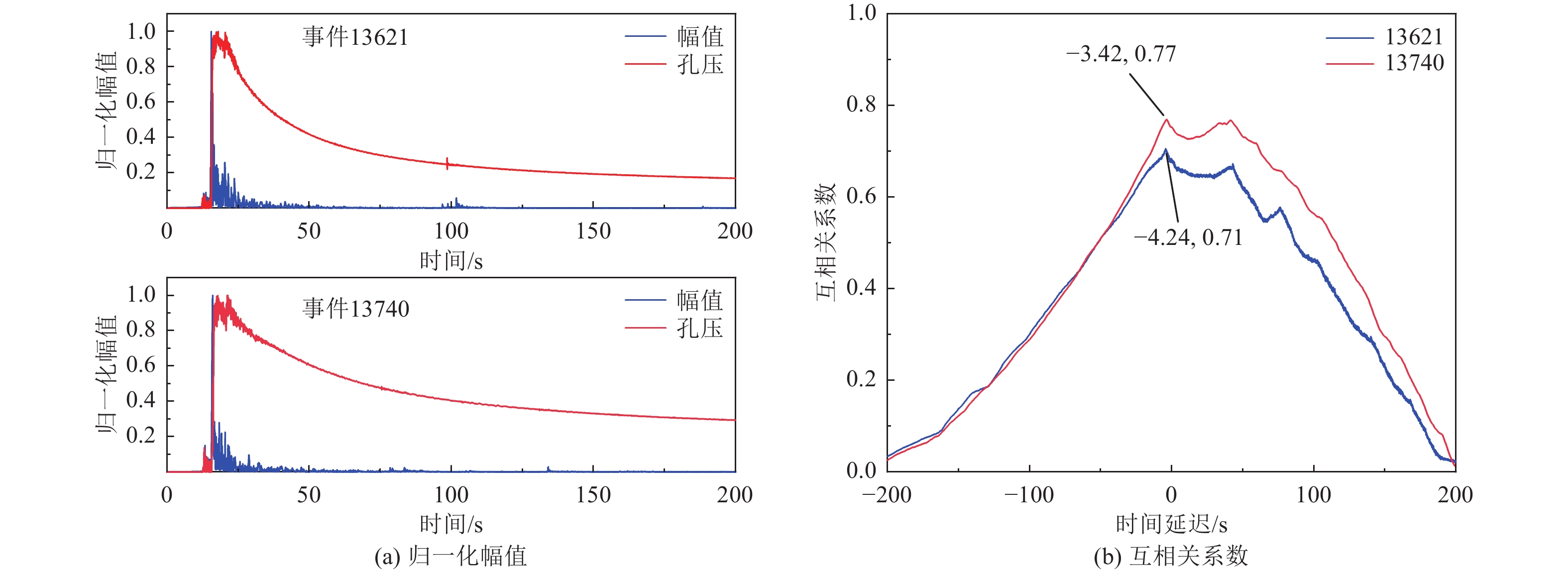
图 9 地震事件希尔伯特时频图
Figure 9. Time-frequency plot of super-porous pressure ratio for seismic events
表 1 新西兰地震序列情况
Table 1. Earthquake sequence in New Zealand
序号 时间 震级 1 2010-09-04(达菲尔德) MW7.1 2 2011-02-22(坎特伯雷) MW6.2 3 2011-06-13 MW5.3 4 2011-06-13 MW6.0 5 2011-12-23 MW5.8 6 2011-12-23 MW5.9 7 2011-12-23 MW4.9  下载: 导出CSV
表 2 台站液化情况
Table 2. Liquefaction of the station
序号 台站名称 达菲尔德地震 坎特伯雷地震 场地类型 液化触发计算 地表液化现象 地震动特征 液化触发计算 地表液化现象 地震动特征 1 CACS 无记录 否 否 无记录 否 否 D 2 CBGS 否 否 否 是 否 是 D 3 CCCC 否 否 否 是 是 是 D 4 CHHC 否 否 否 是 是 是 D 5 CMHS 是 否 否 是 是 是 D 6 HPSC 否 是 是 是 是 是 E 7 HVSC 否 否 否 否 否 否 C 8 KPOC 无记录 否 否 无记录 否 否 E 9 NBLC 否 否 无记录 是 否 无记录 D 10 NNBS 否 否 否 是 否 是 E 11 PPHS 否 否 否 否 否 否 D 12 PRPC 否 否 否 否 是 是 E 13 REHS 是 否 否 是 否 是 D 14 RHSC 无记录 否 否 无记录 否 否 D 15 SHLC 是 否 否 是 是 是 D 16 SMTC 无记录 否 否 无记录 否 否 D
下载: 导出CSV
表 3 布劳利地震序列信息
Table 3. Brawley earthquake sequence information
事件编号 地方近震震级ML 震源深度/km 震中距/km 加速度峰值/Gal 东西向 南北向 竖直向 13442 4.59 70.0 60.0 80.0 70.0 60.0 13452 5.32 130.0 184.0 165.0 130.0 184.0 13453 4.89 122.0 89.0 113.0 122.0 89.0 13457 4.33 99.0 20.0 101.0 99.0 20.0 13519 5.44 181.0 175.0 173.0 181.0 175.0 13529 4.25 115.0 28.0 70.0 115.0 28.0 13603 4.31 32.0 9.0 28.0 32.0 9.0 13621 4.61 270.0 63.0 275.0 270.0 63.0 13740 4.90 249.0 121.0 320.0 249.0 121.0 13891 4.22 28.0 28.0 35.0 28.0 28.0
下载: 导出CSV
-
陈龙伟, 袁晓铭, 孙锐, 2013. 2011年新西兰MW6.3地震液化及岩土震害述评. 世界地震工程, 29(3): 1−9.Chen L. W., Yuan X. M., Sun R., 2013. Review of liquefaction phenomena and geotechnical damage in the 2011 New Zealand MW6.3 earthquake. World Earthquake Engineering, 29(3): 1−9. (in Chinese) 李金宇, 王伟, 王浩宇等, 2024. 地震序列作用下液化场地条件影响研究. 岩土力学, 45(5): 1551−1559. doi: 10.16285/j.rsm.2024.0025Li J. Y., Wang W., Wang H. Y., et al., 2024. Influence of liquefaction site conditions under the action of earthquake sequences. Rock and Soil Mechanics, 45(5): 1551−1559. (in Chinese) doi: 10.16285/j.rsm.2024.0025 吕悦军, 彭艳菊, 兰景岩等, 2008. 场地条件对地震动参数影响的关键问题. 震灾防御技术, 3(2): 126−135.Lv Y. J., Peng Y. J., Lan J. Y., et al., 2008. Some key problems about site effects on seismic ground motion parameters. Technology for Earthquake Disaster Prevention, 3(2): 126−135. (in Chinese) 苏栋, 高翔, 明海燕等, 2016. 液化对砂土场地地表加速度响应的影响. 防灾减灾工程学报, 36(1): 69−74.Su D., Gao X., Ming H. Y., et al., 2016. Influence of liquefaction on the responses of acceleration on the ground surface of sand layer. Journal of Disaster Prevention and Mitigation Engineering, 36(1): 69−74. (in Chinese) 孙锐, 袁晓铭, 2003. 砂土液化对设计反应谱和场地分类的影响. 地震工程与工程振动, 23(5): 46−52.Sun R., Yuan X. M., 2003. Effect of soil liquefaction on design response spectrum and site classification. Earthquake Engineering and Engineering Dynamics, 23(5): 46−52. (in Chinese) 孙锐, 袁晓铭, 2004. 液化土层地震动特征分析. 岩土工程学报, 26(5): 684−690. doi: 10.3321/j.issn:1000-4548.2004.05.023Sun R., Yuan X. M., 2004. Analysis on feature of surface ground motion for liquefied soil layer. Chinese Journal of Geotechnical Engineering, 26(5): 684−690. (in Chinese) doi: 10.3321/j.issn:1000-4548.2004.05.023 唐俊华, 2020. 采用HHT方法分析近场及远场长周期地震动的特点. 建筑技术开发, 47(12): 151−152. doi: 10.3969/j.issn.1001-523X.2020.12.071Tang J. H., 2020. Analysis of characteristics of near-field and far-field long-period ground motions using HHT method. Building Technology Development, 47(12): 151−152. (in Chinese) doi: 10.3969/j.issn.1001-523X.2020.12.071 王海云, 2014. 土层场地的放大作用随深度的变化规律研究−−以金银岛岩土台阵为例. 地球物理学报, 57(5): 1498−1509.Wang H. Y., 2014. Study on variation of soil site amplification with depth: a case at Treasure Island geotechnical array, San Francisco bay. Chinese Journal of Geophysics, 57(5): 1498−1509. (in Chinese) 温瑞智, 冀昆, 任叶飞等, 2015. 基于谱比法的我国强震台站场地分类. 岩石力学与工程学报, 34(6): 1236−1241.Wen R. Z., Ji K., Ren Y. F., et al., 2015. Site classification for strong earthquake stations in China using spectral ratio method. Chinese Journal of Rock Mechanics and Engineering, 34(6): 1236−1241. (in Chinese) 武安绪, 吴培稚, 兰从欣等, 2005. Hilbert-Huang变换与地震信号的时频分析. 中国地震, 21(2): 207−215. doi: 10.3969/j.issn.1001-4683.2005.02.008Wu A. X., Wu P. Z., Lan C. X., et al., 2005. Hilbert-Huang transform and time-frequency analysis of seismic signal. Earthquake Research in China, 21(2): 207−215. (in Chinese) doi: 10.3969/j.issn.1001-4683.2005.02.008 徐国林, 陈龙伟, 2019. 液化场地强震记录的频谱特征. 地震学报, 41(5): 671−679. doi: 10.11939/jass.20190112Xu G. L., Chen L. W., 2019. Frequency spectra characteristics of strong-motion acceleration recordings at liquefied sites. Acta Seismologica Sinica, 41(5): 671−679. (in Chinese) doi: 10.11939/jass.20190112 周国良, 李小军, 侯春林等, 2012. SV波入射下河谷地形地震动分布特征分析. 岩土力学, 33(4): 1161−1166.Zhou G. L., Li X. J., Hou C. L., et al., 2012. Characteristic analysis of ground motions of canyon topography under incident SV seismic waves. Rock and Soil Mechanics, 33(4): 1161−1166. (in Chinese) Bonilla L. F., Steidl J. H., Lindley G. T., et al., 1997. Site amplification in the San Fernando Valley, California: variability of site-effect estimation using the S-wave, coda, and H/V methods. Bulletin of the Seismological Society of America, 87(3): 710−730. doi: 10.1785/BSSA0870030710 Bradley B. A., 2012. Strong ground motion characteristics observed in the 4 September 2010 Darfield, New Zealand earthquake. Soil Dynamics and Earthquake Engineering, 42: 32−46. doi: 10.1016/j.soildyn.2012.06.004 Huang N. E. , Shen Z. , Long S. R. , et al. , 1998. The empirical mode decomposition and the Hilbert spectrum for nonlinear and non-stationary time series analysis. Proceedings of the Royal Society A: Mathematical, Physical and Engineering Sciences, 454(1971): 903−995. Iizuka H., Sakai Y., Koketsu K., 2011. Strong ground motions and damage conditions associated with seismic stations in the February 2011 Christchurch, New Zealand, earthquake. Seismological Research Letters, 82(6): 875−881. doi: 10.1785/gssrl.82.6.875 Jefferies M. , Been K. , 2006. Soil liquefaction: a critical state approach. London: CRC Press. Kawase H. , Matsushima S. , 2014. H/V spectral ratios for both microtremors and earthquake motions and interpretation based the diffuse field theory. In: Japan Geoscience Union Meeting. Kanagawa: Japan Geoscience Union. Orense R. P., Pender M. J., Wotherspoon L. M., 2012. Analysis of soil liquefaction during the recent Canterbury (New Zealand) earthquakes. Geotechnical Engineering Journal of the SEAGS & AGSSEA, 43(2): 8−17. Wood C. M., Cox B. R., Wotherspoon L. M., et al, 2011. Dynamic site characterization of christchurch strong motion stations. Bulletin of the New Zealand Society for Earthquake Engineering, 44(4): 195−204. doi: 10.5459/bnzsee.44.4.195-204 Youd T. L., Carter B. L., 2005. Influence of soil softening and liquefaction on spectral acceleration. Journal of Geotechnical and Geoenvironmental Engineering, 131(7): 811−825. doi: 10.1061/(ASCE)1090-0241(2005)131:7(811) -

 点击查看大图
计量
- 文章访问数: 127
- HTML全文浏览量: 89
- PDF下载量: 216
- 被引次数: 0
